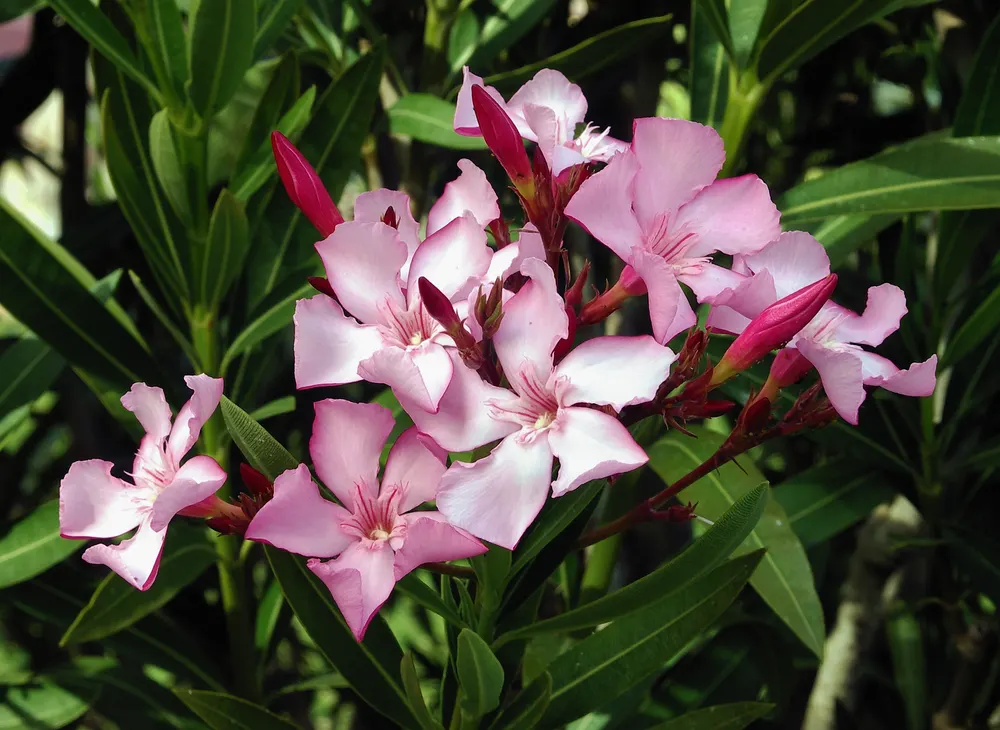
Photo: Alvesgaspar, CC BY 2.5 (via Wikimedia Commons)
Oleander
Nerium oleander
Also known as Rosebay, Rose laurel, Nerium
Key benefits
✦Traditional uses
✦Oleander has been planted for thousands of years across the Mediterranean and Middle East, prized for its glossy evergreen leaves and clusters of pink, white, or red blooms that shrug off heat, drought, and salty coastal air. Ancient writers including Pliny the Elder recorded its beauty alongside warnings about its danger, and the plant's dual reputation, ornamental and lethal, followed it into folklore, where it was sometimes planted near tombs and associated with both love and mourning. In some traditional cultures its potent toxicity was put to grim practical use as a rodenticide or insecticide rather than anything taken internally. Unlike most plants featured in herbal traditions, oleander was valued for its garden presence and symbolism, not for any safe remedy, and herbalists across centuries have consistently listed it among the plants to admire from a distance and never ingest.
How to grow & use it
✦The full apothecary for Oleander
Traditional remedies and step-by-step preparations, a complete growing guide, and how to harvest, dry, and store it, all unlocked with HerbLens Unlimited.
- ✦Remedies & preparations
- ✦ Growing guide
- ✦Harvest & storage
From under $6 a month. Free plant identifications always included.
“For a sunbaked corner of the garden that needs color and toughness, kept always out of reach of curious hands and mouths.”
Oleander's toxins are so persistent that there are documented historical cases of people becoming ill after using its stripped branches as skewers for roasting food over a campfire, and even the honey made by bees from oleander nectar can carry enough toxin to cause illness.
Every part of oleander, the leaves, flowers, stems, roots, sap, and even the dried plant material, is highly toxic and contains potent cardiac glycosides (chiefly oleandrin and neriine). Ingesting any part can cause nausea, irregular heartbeat, seizures, and in serious cases death, and the danger extends to pets and livestock as well as people. The smoke from burning oleander trimmings is toxic to inhale, the sap can irritate skin and eyes on contact, and there are documented cases of poisoning from using oleander stems as food skewers or drinking water that oleander leaves had steeped in. This plant has no safe traditional culinary or internal medicinal use and should never be brewed, eaten, or applied as a home remedy. If oleander ingestion is suspected, contact emergency services or a poison control center immediately, and always consult a qualified medical professional or toxicologist rather than attempting any home treatment.