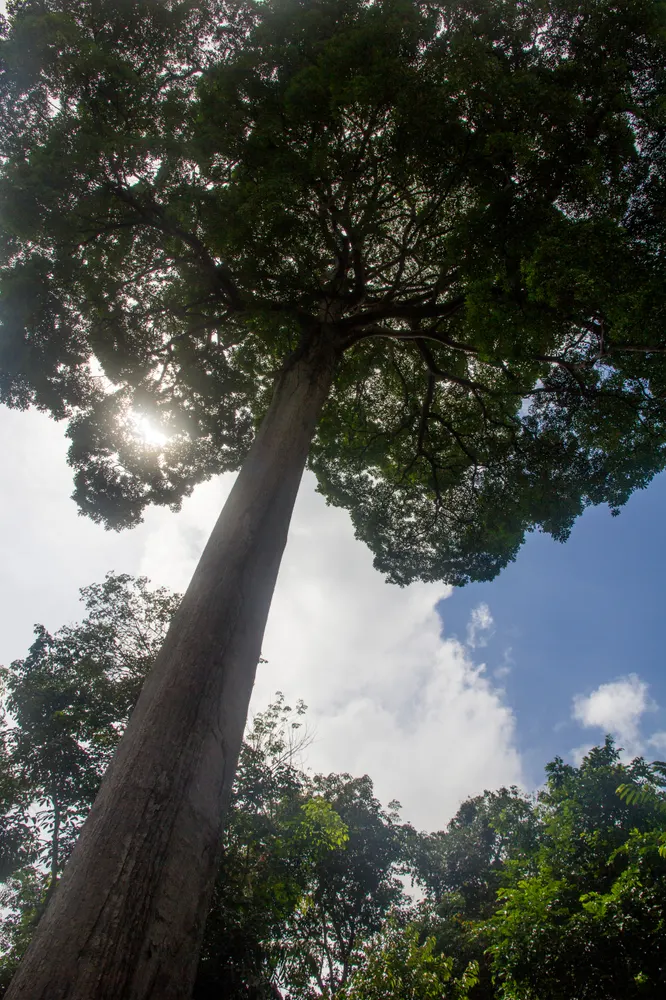
Photo: Alexey Komarov, CC BY 3.0 (via Wikimedia Commons)
Pulai
Alstonia angustiloba
Also known as Hard Alstonia, Pulai Basong, Batino (regional), Narrow-leaved Alstonia
Key benefits
✦Traditional uses
✦In parts of the Malay Peninsula and the wider Sunda region, the bitter inner bark of pulai and its close relatives was steeped and taken as a folk remedy for fevers and general malaise long before quinine and modern antimalarials arrived. Village healers regarded the tree as one of the bitter barks, grouped by taste and reputation with other fever woods of the rainforest rather than by careful chemical understanding. The soft, pale timber has an equally long history, prized for coffins, carving blocks, and pencil wood because it cuts cleanly and takes detail well, and the tree itself became a common roadside and shade planting across Malaysian and Singaporean towns for its quick growth and dense, umbrella-like crown. Because the bark and latex carry potent alkaloids, this bitter-bark tradition has always sat closer to caution than to kitchen-shelf herbalism, and today the tree is far better known for its wood, shade, and perfume than for home remedies.
How to grow & use it
✦The full apothecary for Pulai
Traditional remedies and step-by-step preparations, a complete growing guide, and how to harvest, dry, and store it, all unlocked with HerbLens Unlimited.
- ✦Remedies & preparations
- ✦ Growing guide
- ✦Harvest & storage
From under $6 a month. Free plant identifications always included.
“For the memory of a rainforest giant, its pale flowers opening after dark and pouring scent into the humid night air.”
The genus Alstonia honors Charles Alston, an 18th century Scottish botanist who taught at the University of Edinburgh and never saw the tropical trees that would carry his name. Pulai trees are also famous, sometimes infamous, for the heavy, sweet perfume their night flowers release, strong enough that some Southeast Asian towns have debated removing streetside plantings simply because the evening scent overwhelms nearby homes.
Alstonia angustiloba, like other members of the genus Alstonia, produces bitter indole alkaloids and milky latex in its bark and stems that are pharmacologically active and can be toxic if ingested in uncontrolled amounts, with reported effects including nausea, vomiting, and dizziness at higher doses. The latex can also irritate skin and eyes on contact. Its safety in pregnancy, while nursing, or alongside medications has not been established, and traditional fever-bark preparations from this genus should not be self-administered or foraged for home use. This entry is offered for historical and botanical interest only; please do not attempt to prepare or consume any part of this plant, and speak with a qualified healthcare provider or toxicologist before considering any traditional use.