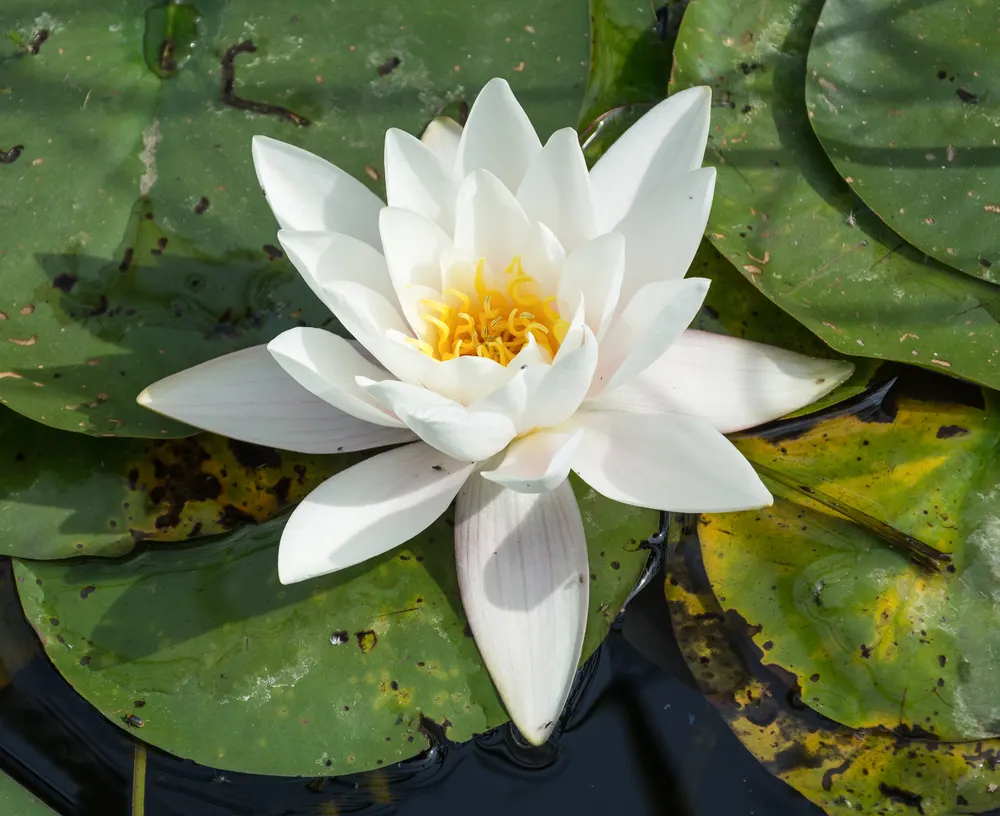
Photo: Jacek Halicki, CC BY-SA 4.0 (via Wikimedia Commons)
White Water Lily
Nymphaea alba
Also known as European White Waterlily, White Lotus, Nenuphar, Water Nymph
Key benefits
✦Traditional uses
✦The white water lily has floated through European folklore and folk medicine for centuries, its still, moonlit blossoms tied to dreams, sleep, and quiet nights. Medieval monks and nuns are said to have brewed the flowers and rhizome into a bitter tea meant to calm restlessness and dampen desire, earning it old country names like nun's tea. Herbalists of the time also turned to the petals for their cooling, soothing qualities, using them in washes and infusions for irritated skin. Long before any of that, the plant carried a quieter symbolism too, its blooms opening with the sun each morning and closing again each evening, a small daily ritual that made it feel like a keeper of rest.
How to grow & use it
✦The full apothecary for White Water Lily
Traditional remedies and step-by-step preparations, a complete growing guide, and how to harvest, dry, and store it, all unlocked with HerbLens Unlimited.
- ✦Remedies & preparations
- ✦ Growing guide
- ✦Harvest & storage
From under $6 a month. Free plant identifications always included.
- ✦Chamomile
- ✦Lavender
- ✦Valerian
- ✦Chamomile
- ✦Blue lotus (Nymphaea caerulea)
“For the hush of still water at dusk, and a mind ready to settle.”
The white water lily closes its petals each evening and sinks slightly below the surface, then reopens and rises again with the morning sun, a daily rhythm so reliable that Linnaeus reportedly used flowers like it to help design his famous flower clock.
The rhizome is much stronger than the flower and contains alkaloid compounds, so it should not be prepared as a home remedy; keep flower preparations modest and occasional. Avoid during pregnancy and breastfeeding, and be cautious combining it with sedative medications.