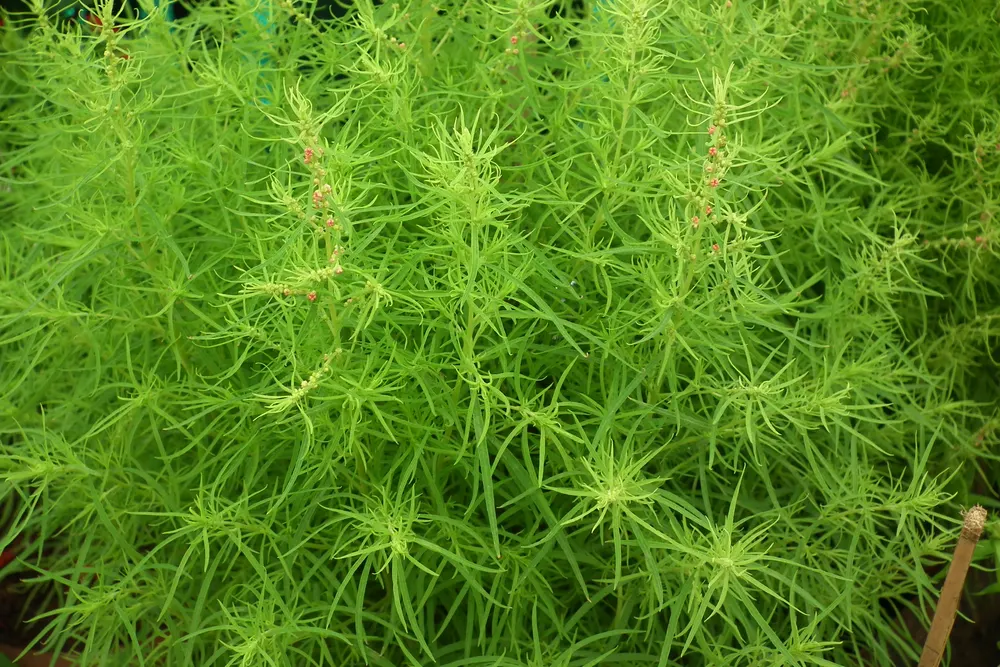
Photo: Rameshng, CC BY-SA 3.0 (via Wikimedia Commons)
Summer Cypress
Kochia scoparia
Also known as Burning Bush, Belvedere, Mexican Firebrush, Fireweed, Di Fu Zi (seed, in Traditional Chinese Medicine)
Key benefits
✦Traditional uses
✦Long before it became a garden favorite, Kochia scoparia was known to herbalists in China, where the dried seed, called Di Fu Zi, was traditionally gathered in autumn and used to address itchy skin conditions and urinary discomfort. It found its way into old formulas alongside other cooling, drying herbs, valued for calming irritation rather than as an everyday tonic. In the West, the plant took on an entirely different life as a landscape ornamental, prized for its tidy, feathery form that flushes brilliant crimson each fall, earning it the nickname burning bush. Its dual identity, quiet medicinal footnote in the East and showy hedge plant in the West, makes it one of the more curious entries in any herbal atlas.
How to grow & use it
✦The full apothecary for Summer Cypress
Traditional remedies and step-by-step preparations, a complete growing guide, and how to harvest, dry, and store it, all unlocked with HerbLens Unlimited.
- ✦Remedies & preparations
- ✦ Growing guide
- ✦Harvest & storage
From under $6 a month. Free plant identifications always included.
- ✦Often paired historically with other cooling, skin-soothing herbs such as chrysanthemum and plantain leaf in traditional East Asian herbalism
- ✦Calendula (for traditional skin-soothing use)
- ✦Cleavers (for traditional urinary support)
“For the gardener who wants a hedge that spends all summer as quiet green lace, then lights up like embers the moment autumn arrives.”
Gardeners call it burning bush because its soft green, cypress-like foliage turns a fiery crimson-purple with the first cool nights of autumn, a transformation so reliable that entire hedges are planted just to watch it happen.
The foliage can build up oxalates and nitrates, and livestock that graze on it heavily have developed skin photosensitization along with liver and kidney stress. The dried seed (Di Fu Zi) has a long history in Traditional Chinese Medicine but only in small, professionally prepared doses, never as a home tea, and it is avoided in pregnancy.