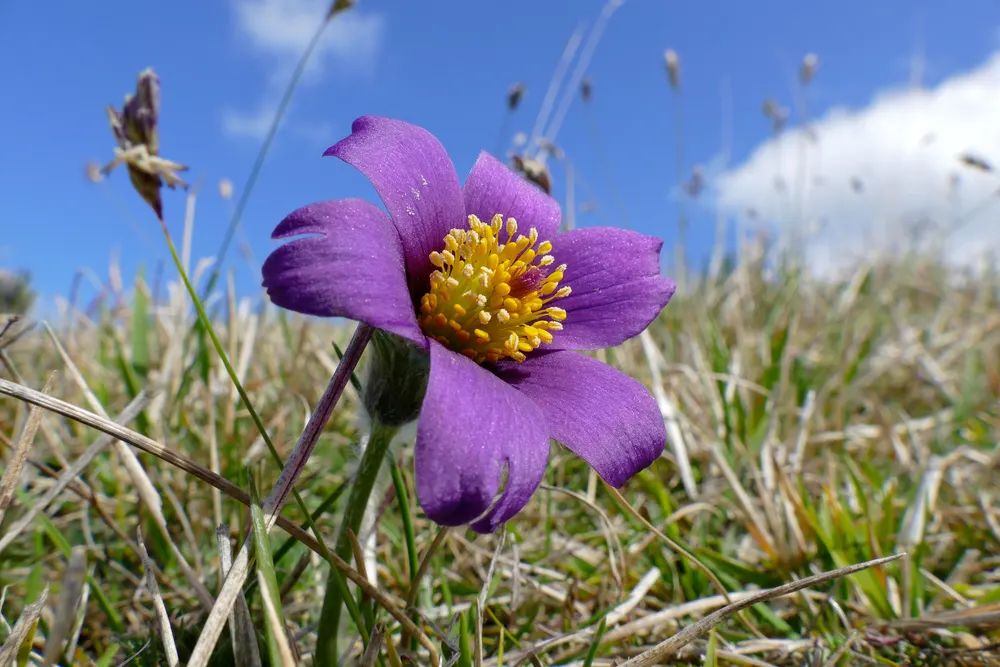
Photo: Bernard DUPONT from FRANCE, CC BY-SA 2.0 (via Wikimedia Commons)
Pasque Flower
Pulsatilla vulgaris
Also known as Pasqueflower, Meadow Anemone, Danes' Blood, Easter Flower, Wind Flower
Key benefits
✦Traditional uses
✦Pasque flower has carried deep symbolic weight in Europe for centuries, its furry purple blooms pushing up through cold ground right as Easter arrives, which is how it earned its name from the old word for Passover. Nineteenth century folk healers and early homeopaths took an interest in it for nerve pain, eye complaints, and women's troubles, but the raw plant proved far too caustic and unpredictable for safe everyday use. Today its legacy lives on almost entirely within professional homeopathy, where it is known simply as Pulsatilla and prepared through careful dilution rather than as a garden herb one might pick and steep. In the garden and the wild, it endures instead as one of the most beloved and protected native wildflowers of the chalk downs.
How to grow & use it
✦The full apothecary for Pasque Flower
Traditional remedies and step-by-step preparations, a complete growing guide, and how to harvest, dry, and store it, all unlocked with HerbLens Unlimited.
- ✦Remedies & preparations
- ✦ Growing guide
- ✦Harvest & storage
From under $6 a month. Free plant identifications always included.
- ✦Pulsatilla-based homeopathic blends are sometimes paired professionally with Chamomilla or Gelsemium, though this is a homeopath's decision, not a home herbalist's
- ✦German chamomile for gentle traditional nerve-calming support
- ✦Valerian root for traditional sleep and tension support
“The first violet flame of the chalk downs, unfurling silver and silky right as the ground remembers spring.”
In parts of England, pasque flower earned the folk name Danes' Blood, because it was often found growing on ancient earthworks and battle sites, and legend held that the purple flowers sprang up from the blood of Danish soldiers buried there.
Pasque flower is toxic and should never be eaten, brewed, or handled carelessly. Every part of the fresh plant contains ranunculin, which breaks down into protoanemonin when the leaves or stems are bruised or crushed, an acrid compound that blisters skin and mucous membranes on contact and causes serious gastrointestinal, nervous system, and cardiac symptoms if swallowed. Drying does not reliably neutralize this toxicity, and there is no safe home dose. The only way this plant is used medicinally today is as a homeopathic remedy called Pulsatilla, prepared by trained professionals through a process of extreme dilution that leaves little or no detectable plant material behind, which is an entirely different practice from herbal tea or tincture making. It should be avoided entirely during pregnancy, as it has a long folk history as a uterine stimulant, and it is also toxic to pets, horses, and livestock if grazed. Please do not attempt to prepare or ingest this plant at home, and speak with a qualified healthcare provider or homeopathic practitioner before considering any product containing it.