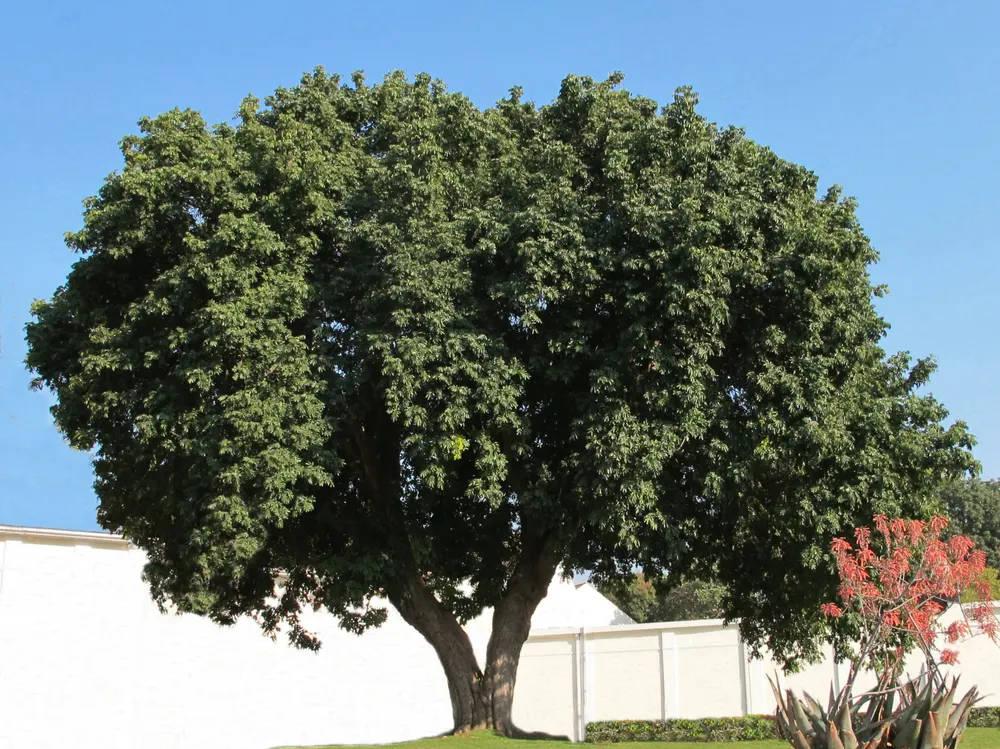
Photo: Hectonichus, CC BY-SA 4.0 (via Wikimedia Commons)
Natal Mahogany
Trichilia emetica
Also known as Cape Mahogany, Umkhuhlu, Mafura Tree, Christmas Bells Tree
Key benefits
✦Traditional uses
✦Natal mahogany has stood at the center of village life across eastern and southern Africa for generations, its wide crown offering shade for gatherings and its wood carved into stools, drums, and dugout canoes because it resists termites so well. The tree's very name comes from its bark and root, which traditional healers used as a powerful emetic and purgative, a treatment reserved for serious ailments and administered with great caution rather than everyday use. Far gentler and more enduring is the oil pressed from its seeds, a thick, butter-like fat known locally as mafura, long rubbed into skin and hair to soften and protect them from the sun and dry season winds. In many communities the tree itself was considered too important to fell carelessly, sometimes left standing as a boundary marker or a meeting place beneath its branches.
How to grow & use it
✦The full apothecary for Natal Mahogany
Traditional remedies and step-by-step preparations, a complete growing guide, and how to harvest, dry, and store it, all unlocked with HerbLens Unlimited.
- ✦Remedies & preparations
- ✦ Growing guide
- ✦Harvest & storage
From under $6 a month. Free plant identifications always included.
- ✦Marula oil
- ✦Shea butter
- ✦Baobab oil
- ✦Shea butter
- ✦Marula oil
“For the deep shade of an old African tree overhead, and the silken oil pressed from its seeds.”
The species name emetica is Latin for causing vomiting, a nod to how strongly traditional bark and root preparations from this tree could act on the body, and a reminder that not every part of a useful tree is a gentle one.
The bark, roots, and unprocessed seeds of Trichilia emetica contain compounds that are strongly purgative and emetic, meaning they can cause vomiting, diarrhea, and other significant reactions, and in some regions crushed seed cake has even been used as a fish poison. These plant parts are not suitable for home teas, tinctures, or any other ingestion, and should never be prepared or dosed without expert supervision. The seed oil is intended for external, topical use only; patch test before applying to skin or hair, and avoid use during pregnancy or on broken skin without guidance. Anyone interested in this tree for wellness purposes should speak with a qualified healthcare professional or experienced herbalist rather than experimenting on their own.