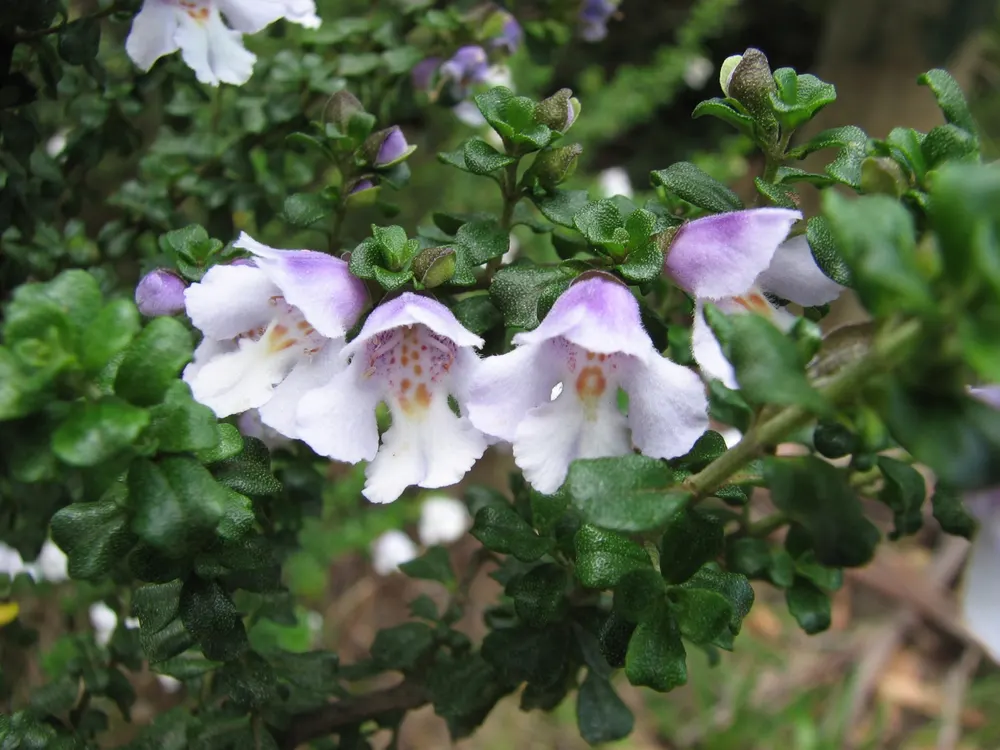
Photo: Melburnian, CC BY 3.0 (via Wikimedia Commons)
Alpine Mint Bush
Prostanthera cuneata
Also known as Alpine Mint Bush, Mountain Mint Bush
Key benefits
✦Traditional uses
✦Alpine Mint Bush grows wild along the wind-scoured heathlands of the Victorian and New South Wales high country, where its small, leathery leaves release a sharp, eucalyptus-like mint fragrance the moment they are brushed or crushed. Gardeners prize it as one of the few members of its genus tough enough to shrug off hard frosts, which carried it out of the Australian alps and into cottage gardens and rockeries across cooler climates worldwide. Its documented history is more horticultural than medicinal, valued for generations simply as a hardy, sweetly scented hedge and border plant rather than as a healing herb.
Growing guide
✦Fresh to dried
✦Traditional preparations
✦Minty Garden Infusion
A simple, mild infusion enjoyed at home mainly for its fresh, minty aroma rather than any established remedy.
How it's made. Steep 1 teaspoon of fresh crushed leaves (or a scant half teaspoon dried) in 250 ml of just-boiled water for 5 minutes, then strain.
- ✦Peppermint
- ✦Lemon balm
- ✦Eucalyptus leaf
- ✦Peppermint
- ✦Spearmint
“For the hardy little hedge that hands you a burst of mint every time you brush past it.”
Of all the mint bushes in the Prostanthera genus, most are too frost-tender to survive a hard winter outside Australia, but Alpine Mint Bush shrugged that reputation off entirely, which is exactly why it became a beloved hedge plant in cold British and American gardens where its cousins simply cannot grow.
Alpine mint bush is not documented as toxic and is commonly grown and handled without concern, though as with any aromatic plant, stop use if the crushed foliage irritates your skin.