Photo: Oceancetaceen - Alice Chodura, Public domain (via Wikimedia Commons)
Roman Chamomile
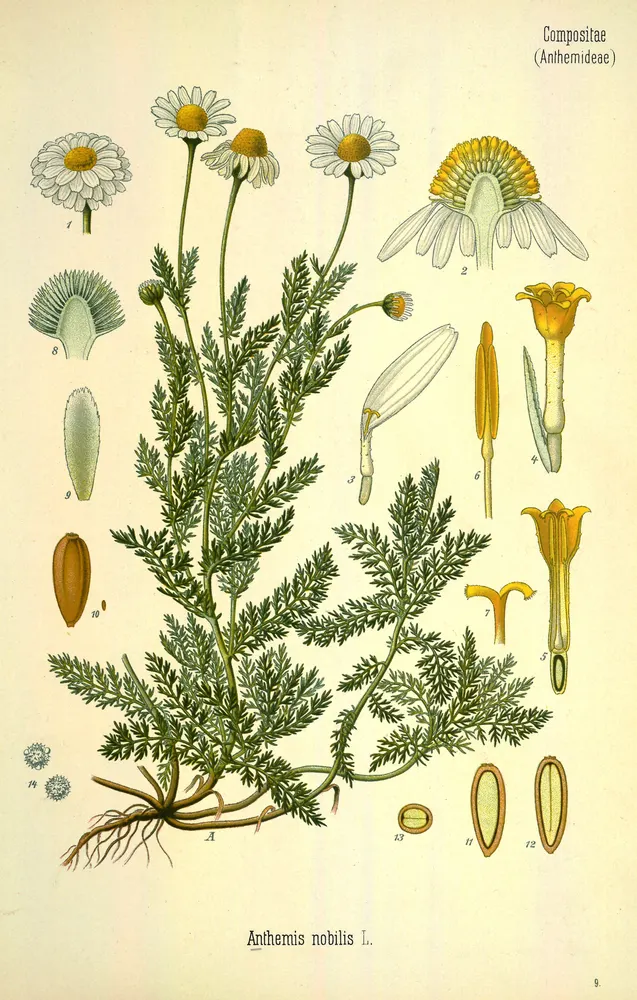
Chamaemelum nobile
Also known as English Chamomile, Garden Chamomile, Ground Apple, True Chamomile, Anthemis nobilis
Key benefits
✦Traditional uses
✦Roman chamomile has been treasured in European herbalism for centuries as a gentle, apple-scented comfort herb, brewed into tea to soothe a restless stomach and quiet a busy mind before bed. The Anglo-Saxons counted it among their nine sacred herbs, believed to guard against illness and ward off harm. Through the Middle Ages and into Victorian times, it was tucked into pillows, strewn on floors to freshen the air, and grown along garden paths so that a passing footstep would release its warm, fruity fragrance. Generations of grandmothers reached for a cup of chamomile tea as the simplest household remedy for an unsettled belly or a hard day.
How to grow & use it
✦The full apothecary for Roman Chamomile
Traditional remedies and step-by-step preparations, a complete growing guide, and how to harvest, dry, and store it, all unlocked with HerbLens Unlimited.
- ✦Remedies & preparations
- ✦ Growing guide
- ✦Harvest & storage
From under $6 a month. Free plant identifications always included.
- ✦Lavender
- ✦Lemon Balm
- ✦Peppermint
- ✦German Chamomile (Matricaria chamomilla)
- ✦Lemon Balm
“For the quiet hour before sleep, when you want the whole day to soften into something as simple as a warm apple-scented cup.”
Roman chamomile earned a reputation as the herb that thrives on neglect, since walking or sitting on it only crushes its leaves and releases more of its sweet, apple-like fragrance, which is exactly why Tudor gardeners planted it as a living, scented lawn instead of grass.
Roman chamomile is a daisy-family plant, so people sensitive to ragweed or related plants may react to it. Its natural coumarin content means it's traditionally avoided by people on blood thinners like warfarin, and its old reputation as an emmenagogue means it's generally avoided in medicinal amounts during pregnancy.