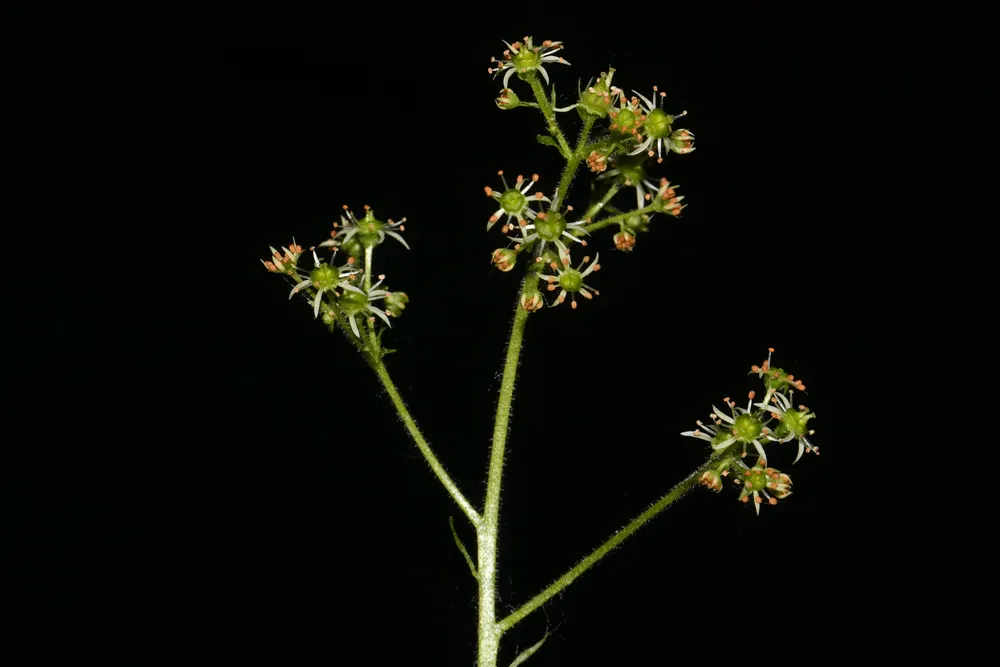
Photo: (c) Brian Finzel, some rights reserved (CC BY-SA), CC BY-SA 4.0 (via Wikimedia Commons)
Swamp Saxifrage
Saxifraga pensylvanica
Also known as Eastern Saxifrage, Pennsylvania Saxifrage, Wild Beet Saxifrage
Key benefits
✦Traditional uses
✦Swamp saxifrage does not carry the deep, well-documented herbal history that many of its saxifrage cousins do, and no reliable record of it being used as a home remedy has come down to us. What it does carry is a quieter kind of significance: it is one of the earliest tall wildflowers to rise out of the mud in eastern wetlands each spring, and its clustered greenish blooms have long marked the turning of the season for foragers, birders, and botanists walking the fens. Its story lives more in field guides and wetland restoration plots than in the apothecary cabinet.
How to grow & use it
✦The full apothecary for Swamp Saxifrage
Traditional remedies and step-by-step preparations, a complete growing guide, and how to harvest, dry, and store it, all unlocked with HerbLens Unlimited.
- ✦Remedies & preparations
- ✦ Growing guide
- ✦Harvest & storage
From under $6 a month. Free plant identifications always included.
- ✦Marsh marigold
- ✦Cardinal flower
- ✦Turtlehead
- ✦Early saxifrage (for drier, rockier garden sites)
“For the wet, overlooked corner of the yard that nothing else wants to grow in, and the quiet thrill of the first tall bloom pushing up through spring mud.”
The genus name Saxifraga comes from the Latin saxum, meaning rock, and frangere, to break, a nod to alpine saxifrages that root in stone crevices and were once believed, by the old doctrine of signatures, to be able to dissolve kidney stones in the body. Swamp saxifrage is something of a family rebel: instead of clinging to rock, it wades happily into mud and standing water.
Swamp saxifrage has no established record as food or medicine and should not be eaten; wetland look-alikes can be toxic, so leave identification to a botanist.