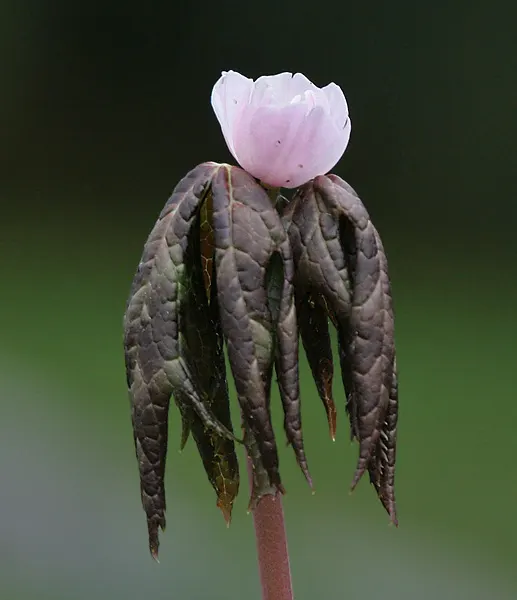
Photo: J.M.Garg, CC BY 3.0 (via Wikimedia Commons)
Himalayan Mayapple
Podophyllum hexandrum
Also known as Indian Mayapple, Indian Podophyllum, Bankakri, Himalayan Podophyllum
Key benefits
✦Traditional uses
✦Himalayan mayapple has been used for centuries in Ayurvedic, Unani, and Tibetan medicine, where the resin drawn from its root, called podophyllin, was applied topically for warts and used cautiously as a purgative for liver and digestive complaints. Healers who worked with it did so with great respect for its power, knowing that the line between remedy and poison was thin. In the twentieth century, chemists isolated podophyllotoxin from this same root and used it to develop etoposide and teniposide, chemotherapy medicines still prescribed today for certain lung cancers and lymphomas. It remains one of the clearest examples of a folk remedy that quietly reshaped modern pharmacy.
How to grow & use it
✦The full apothecary for Himalayan Mayapple
Traditional remedies and step-by-step preparations, a complete growing guide, and how to harvest, dry, and store it, all unlocked with HerbLens Unlimited.
- ✦Remedies & preparations
- ✦ Growing guide
- ✦Harvest & storage
From under $6 a month. Free plant identifications always included.
“A high-altitude beauty whose fierce chemistry helped build modern medicine, best admired in the woodland garden and never in the teacup.”
The Himalayan mayapple's root gave rise to etoposide, a chemotherapy drug still used today, but the wild plant became so sought after for this purpose that it is now considered endangered across much of its native range and is protected under harvest and trade restrictions in several Himalayan countries.
Every part of Podophyllum hexandrum, especially the root, rhizome, and resin (podophyllin), is highly toxic if ingested and can cause severe vomiting, diarrhea, neurological symptoms, and in significant doses, death. The plant contains podophyllotoxin, a potent cytotoxic compound that is also a known abortifacient, so it must never be used by anyone who is pregnant or might become pregnant. The unripe fruit and foliage are toxic as well, and only the fully ripe fruit has any history of limited edible use in its native range, a distinction too easy to get wrong. Direct skin or eye contact with the resin can cause significant irritation. This is not a plant for home teas, tinctures, or topical self-treatment of any kind; its only legitimate therapeutic role today is as a source of pharmaceutical-grade podophyllotoxin used in tightly controlled, prescription chemotherapy drugs. Because the species is also endangered and protected in parts of its Himalayan range, wild harvest may be restricted or illegal. Enjoy it as a striking, shade-loving ornamental, and leave any medicinal question about it to a qualified physician or pharmacologist.