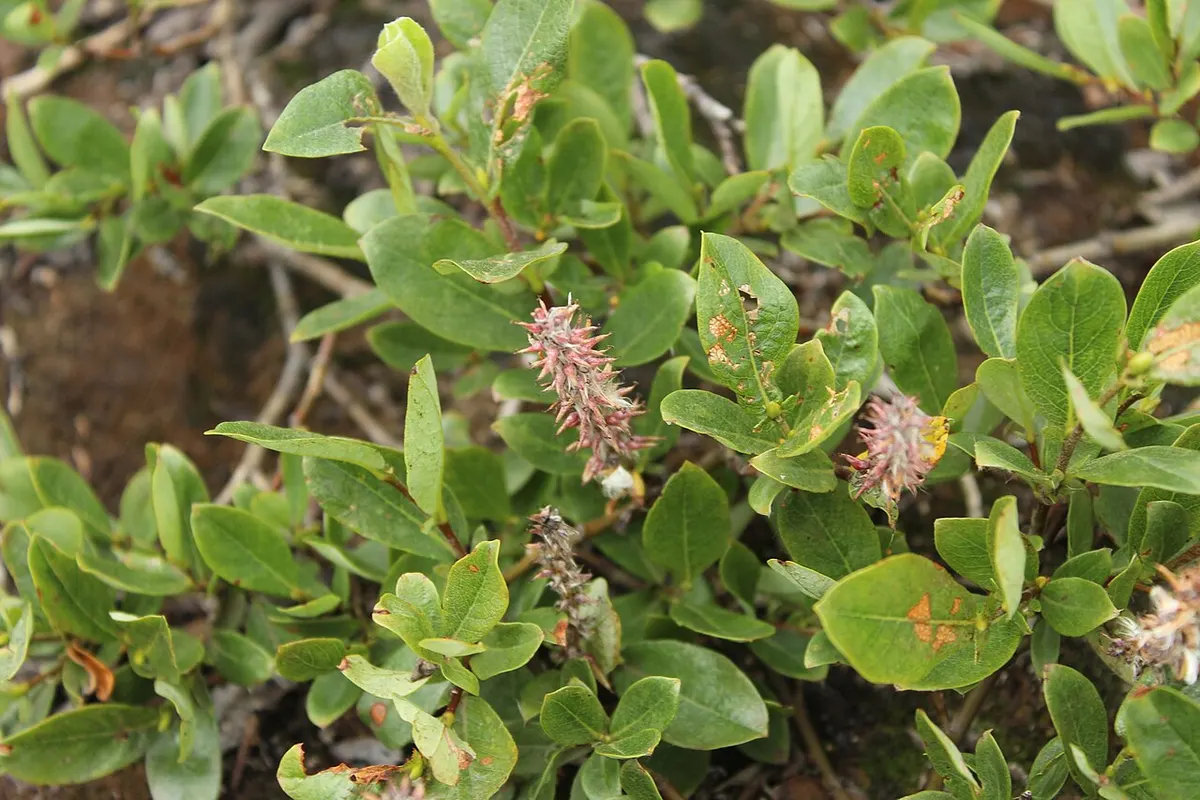
Photo: nina_nesterova, CC BY (via Wikimedia Commons)
Rock Willow
Salix saxatilis
Also known as Rock willow, Alpine willow, Stone willow
Key benefits
✦Traditional uses
✦Like its better known relatives, white willow and black willow, Rock Willow carries the bitter compound salicin in its bark, the same family of chemistry that eventually led to the development of aspirin. Herbalists and travelers who lived among the rocky slopes and scree fields where this low, tenacious shrub takes hold traditionally stripped and dried its bark to brew into teas meant to ease aching joints, dull headaches, and the low fevers that came with cold, wet exposure at altitude. Because it roots into thin, stony soil where taller willows cannot survive, Rock Willow became a modest but dependable resource to those who traveled the high ground, valued less for abundance than for showing up reliably where softer herbs simply would not grow.
How to grow & use it
✦The full apothecary for Rock Willow
Traditional remedies and step-by-step preparations, a complete growing guide, and how to harvest, dry, and store it, all unlocked with HerbLens Unlimited.
- ✦Remedies & preparations
- ✦ Growing guide
- ✦Harvest & storage
From under $6 a month. Free plant identifications always included.
- ✦Meadowsweet
- ✦Ginger
- ✦Peppermint
- ✦White willow bark
- ✦Meadowsweet
“For the ache that settles in after a long day on rocky ground.”
Rock Willow is one of the few willows built low and tough enough to anchor directly into bare scree and talus, its wide, shallow roots helping stitch together loose mountain slopes that would otherwise slide and wash away.
Rock Willow bark contains salicin, similar to aspirin, so avoid it if you have a salicylate allergy, are pregnant or breastfeeding, or take blood-thinning medication. It should not be given to children or teens recovering from a viral illness, due to the risk of Reye's syndrome.