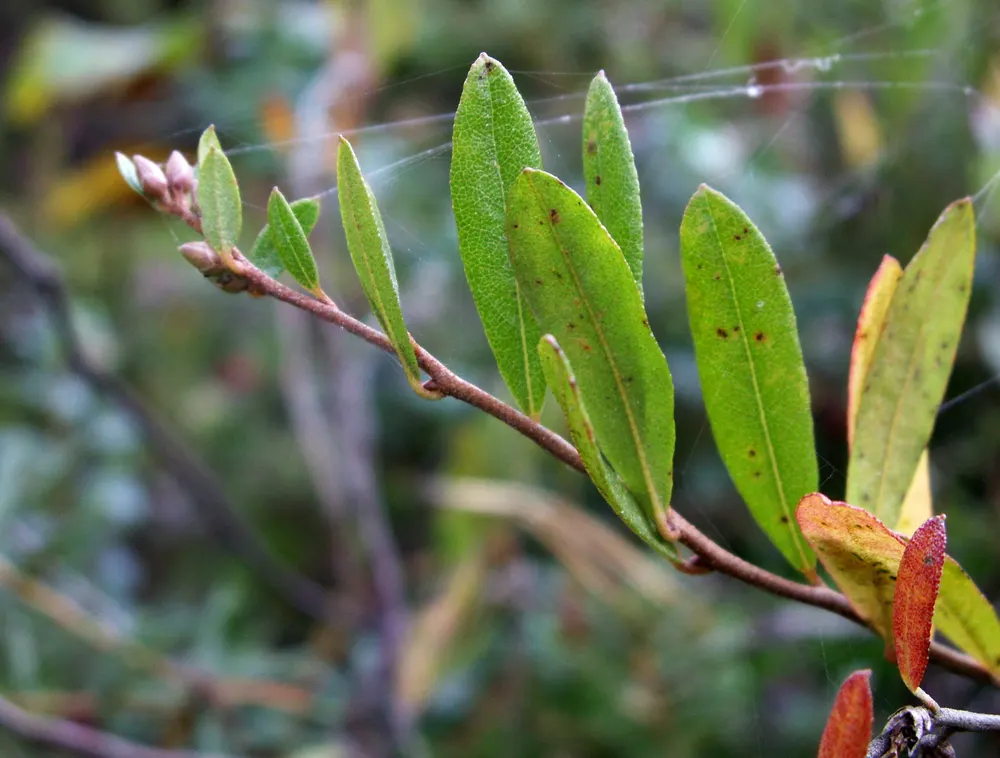
Photo: bernd gliwa, CC BY-SA 2.5 (via Wikimedia Commons)
Leatherleaf
Chamaedaphne calyculata
Also known as Cassandra, Bog Rosemary (folk name, sometimes confused with true bog rosemary), Leather-leaved Andromeda
Key benefits
✦Traditional uses
✦Leatherleaf is not a kitchen or medicine cabinet herb in the way many entries in this atlas are, and honesty matters more than a tidy story. Its real legacy is ecological rather than culinary: naturalists have long used it as a living signpost, since a shoreline fringed in leatherleaf usually means a bog is quietly filling in, one mat of roots and sphagnum at a time. Older botanical writers placed it in its own genus, Cassandra, a small nod to how easily it was overlooked despite being one of the first shrubs to green a frozen bog edge each spring. Where other bog dwellers like Labrador tea earned a place in the teapot, leatherleaf mostly earned a place in the field notebook.
How to grow & use it
✦The full apothecary for Leatherleaf
Traditional remedies and step-by-step preparations, a complete growing guide, and how to harvest, dry, and store it, all unlocked with HerbLens Unlimited.
- ✦Remedies & preparations
- ✦ Growing guide
- ✦Harvest & storage
From under $6 a month. Free plant identifications always included.
- ✦Labrador tea
- ✦Cranberry
- ✦Sphagnum moss
- ✦Bog rosemary (Andromeda polifolia)
“For the frozen hem of a bog in March, where leatherleaf is already blooming while everything else is still asleep.”
Leatherleaf's old botanical name was Cassandra calyculata, borrowed from the Trojan princess whose true prophecies nobody believed, a fitting namesake for a modest shrub that quietly predicts a bog's future long before the change is obvious to anyone walking past.
This plant has no established history as food or medicine. It belongs to a family that includes species containing grayanotoxins, compounds genuinely toxic to people and grazing animals, so it should be kept away from livestock and pets and never ingested.