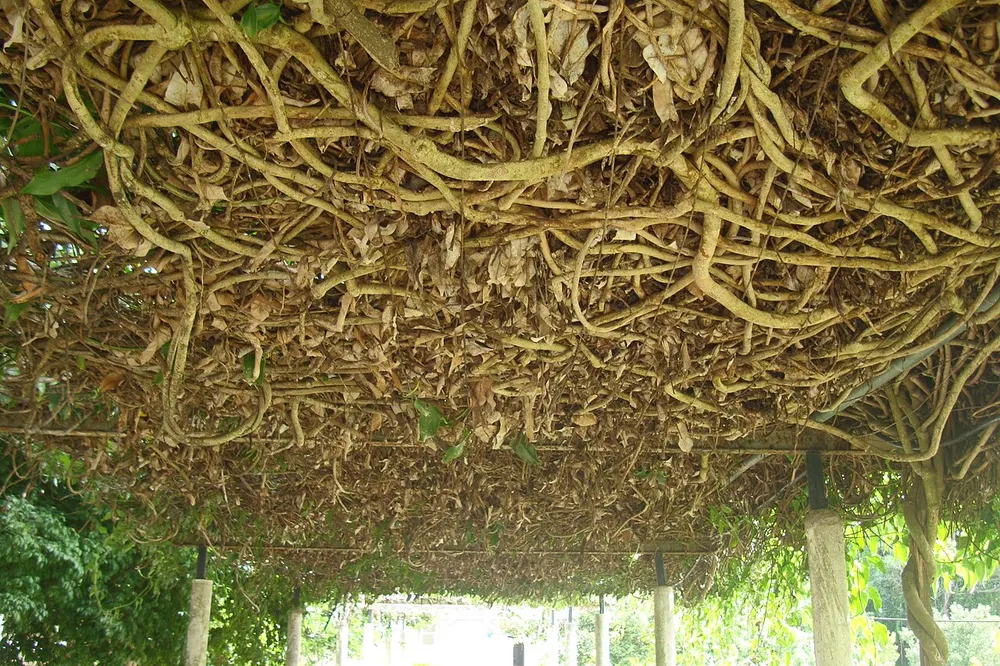
Photo: Eugenio Hansen, OFS, CC BY-SA 3.0 (via Wikimedia Commons)
Guaco
Mikania glomerata
Also known as Guaco, Cipó-guaco, Erva-guaco, Coração-de-Jesus, Cipó-caatinga
Key benefits
✦Traditional uses
✦Long before it reached pharmacy shelves, guaco was a household remedy passed down through generations in Brazil and neighboring countries, where the vine grows wild along forest margins. Rural and Indigenous communities gathered its glossy leaves and simmered them into syrups and teas to quiet a stubborn cough or ease a tight chest through the damp season. That old kitchen remedy never really went out of style. Today, guaco leaf remains one of the most recognized ingredients on Brazilian pharmacy shelves, where bottled cough syrups still carry its name.
How to grow & use it
✦The full apothecary for Guaco
Traditional remedies and step-by-step preparations, a complete growing guide, and how to harvest, dry, and store it, all unlocked with HerbLens Unlimited.
- ✦Remedies & preparations
- ✦ Growing guide
- ✦Harvest & storage
From under $6 a month. Free plant identifications always included.
- ✦Mullein
- ✦Licorice root
- ✦Elderberry
- ✦Mullein leaf
- ✦Thyme
“When a cough won't quiet and the chest feels tight.”
Guaco is sometimes called 'erva-de-cobra,' or snake herb, because old folklore held that chewing its leaves could counter snakebite. That belief never held up, but the plant's reputation as a chest and throat remedy proved far more durable, and it is still steeped into home teas across Brazil today.
Guaco leaves contain natural coumarins that can thin the blood, so avoid it with anticoagulant medication and stop well before surgery. It is not recommended during pregnancy, breastfeeding, or for young children.