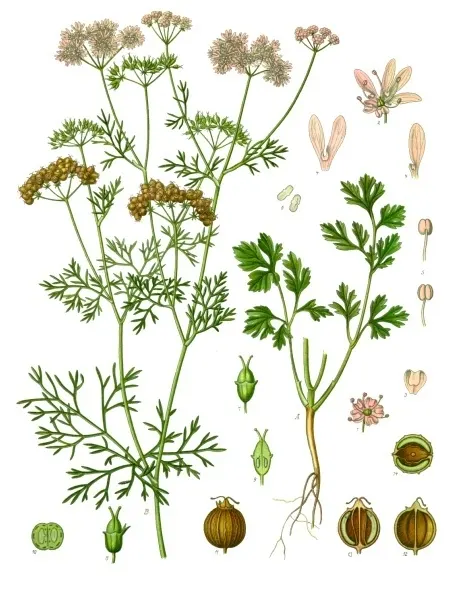
Photo: Franz Eugen Köhler, Köhler's Medizinal-Pflanzen, Public domain (via Wikimedia Commons)
Cilantro
Coriandrum sativum
Also known as Coriander, Chinese Parsley, Dhania
Key benefits
✦Traditional uses
✦Few herbs have traveled as far or as long as this one. Coriander seeds have been found among the burial goods of ancient Egyptian tombs, including that of Tutankhamun, and the plant is mentioned in Sanskrit texts and the writings of early Greek and Roman physicians alike. Across Ayurvedic, Unani, and traditional Mediterranean practice, the seeds were steeped into warm waters and teas to traditionally ease an unsettled stomach, soothe gas and bloating, and freshen the breath after a heavy meal. The fresh leaves, known in the kitchen as cilantro, became just as beloved, threading their bright, citrusy flavor through the cooking of Mexico, India, Southeast Asia, and the Middle East, so that a single plant quietly became one of the most universal seasonings on earth.
How to grow & use it
✦The full apothecary for Cilantro
Traditional remedies and step-by-step preparations, a complete growing guide, and how to harvest, dry, and store it, all unlocked with HerbLens Unlimited.
- ✦Remedies & preparations
- ✦ Growing guide
- ✦Harvest & storage
From under $6 a month. Free plant identifications always included.
- ✦Cumin
- ✦Fennel
- ✦Mint
- ✦Flat-leaf parsley
- ✦Culantro
“For the meal that needs one bright, green, unmistakable finishing note.”
To some people, cilantro tastes bright and citrusy, but to others it tastes distinctly like soap. Researchers eventually traced this to a variation in the OR6A2 gene, which affects how strongly a person perceives the aldehydes that give the leaf its signature smell, making cilantro one of the few herbs with a genuine genetic love-it-or-hate-it divide.
Cilantro and coriander are safe in normal cooking amounts, though the essential oil is too concentrated to take internally. It may enhance the effect of diabetes or blood pressure medication, and those allergic to carrot family plants or mugwort should introduce it carefully.