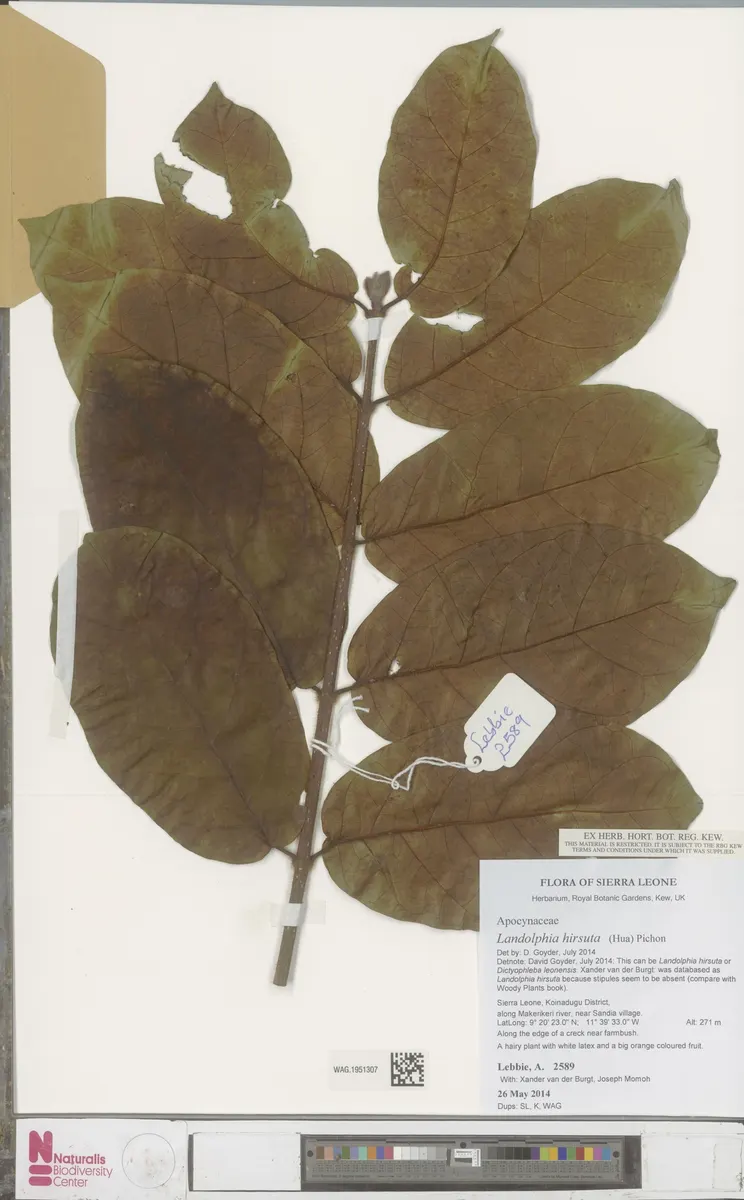
Photo: Naturalis Biodiversity Center, CC0 (via GBIF)
Hairy Rubber Vine
Carpodinus hirsuta
Also known as Hairy Landolphia, Landolphia hirsuta
Key benefits
✦Traditional uses
✦Across the river-banks and gallery forests of West Africa, from Senegal to Cameroon, this vigorous climbing liana has long been part of daily forest life. Its round, fist-sized fruits, sweet and slightly tart, were gathered and eaten fresh by local communities and forest wildlife alike, a familiar bush snack rather than a cultivated crop. In the early twentieth century, its latex became genuinely valuable, tapped and processed into the rubber pastes that were once shipped from Ghanaian and Nigerian ports before the plant world's rubber trade shifted elsewhere. Traditional healers in the region are also recorded as using the bark and root in folk preparations for coughs and other ailments, knowledge that remains part of local ethnobotany even though it has never entered mainstream Western herbalism.
How to grow & use it
✦The full apothecary for Hairy Rubber Vine
Traditional remedies and step-by-step preparations, a complete growing guide, and how to harvest, dry, and store it, all unlocked with HerbLens Unlimited.
- ✦Remedies & preparations
- ✦ Growing guide
- ✦Harvest & storage
From under $6 a month. Free plant identifications always included.
- ✦Landolphia owariensis
- ✦Saba senegalensis
- ✦Cola nitida
- ✦Landolphia owariensis
- ✦Saba senegalensis
“For the wild, sun-warmed sweetness of a forest fruit that fed people long before any nursery catalog knew its name.”
Long before Southeast Asian rubber plantations dominated the trade, the milky latex of this vine was tapped, boiled, and coagulated into a sticky brown export known in the markets of Ghana and Nigeria as "Accra paste" or "lump rubber," one of West Africa's earliest natural rubber industries.
This vine's latex can irritate skin and eyes on contact. Only the ripe fruit pulp is a traditional food; the bark and root have not been studied for safe use and should not be self-prepared.