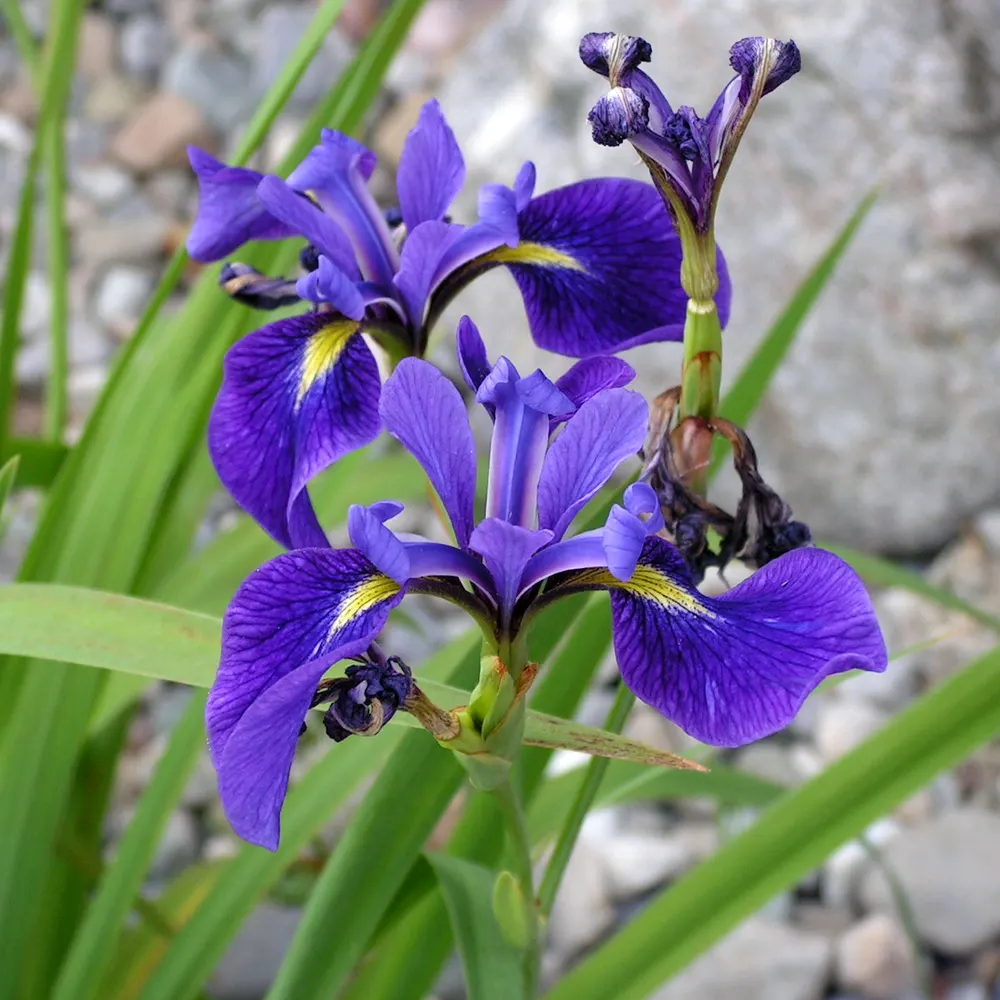
Photo: D. Gordon E. Robertson, CC BY-SA 3.0 (via Wikimedia Commons)
Blue Flag
Iris versicolor
Also known as Wild Iris, Poison Flag, Liver Lily, Water Flag, American Blue Flag
Key benefits
✦Traditional uses
✦Blue Flag has stood sentinel at the marshy edges of eastern North America for generations, its violet blooms rising each spring from the mud like small painted flags. Many Native American nations, including the Iroquois, Meskwaki, and Chippewa, dug and carefully prepared its thick rhizome, valuing it as a powerful purgative and as a poultice applied to wounds, swellings, and burns. Nineteenth century Eclectic physicians later folded the aged, dried root into their own alterative formulas, reaching for it for sluggish liver complaints and stubborn skin trouble under the name blue flag root. Because the fresh root is potent enough to blister skin and irritate the gut, its traditional preparation demanded real patience and expertise, knowledge that today belongs to trained herbalists rather than the home apothecary.
Growing guide
✦Fresh to dried
✦- ✦Yellow dock
- ✦Burdock root
- ✦Dandelion root
- ✦Yellow dock
- ✦Burdock root
“For the hush of a marsh in May, where blue-violet flags rise from the mud like small, watchful sentries.”
The genus Iris is named for the Greek goddess of the rainbow, and Blue Flag's violet petals are marked with delicate gold and white veining, nature's own signposts guiding bees straight to its nectar.
Iris versicolor, especially its fresh rhizome, is toxic if ingested. It contains irritant glycosides (including iridin) and resins that can cause vomiting, diarrhea, and significant gastrointestinal distress, and the sap can cause skin irritation or dermatitis on contact. Even the dried, aged root that appeared in older herbal traditions was handled only by experienced practitioners in carefully measured, prepared forms, never used casually or at home. It should be avoided entirely during pregnancy and breastfeeding, and kept well away from children and pets, who may be drawn to its attractive rhizomes at the water's edge. This entry is offered for historical and botanical interest only; do not forage, prepare, or ingest any part of this plant, and always consult a qualified healthcare professional before considering any traditional herbal use.