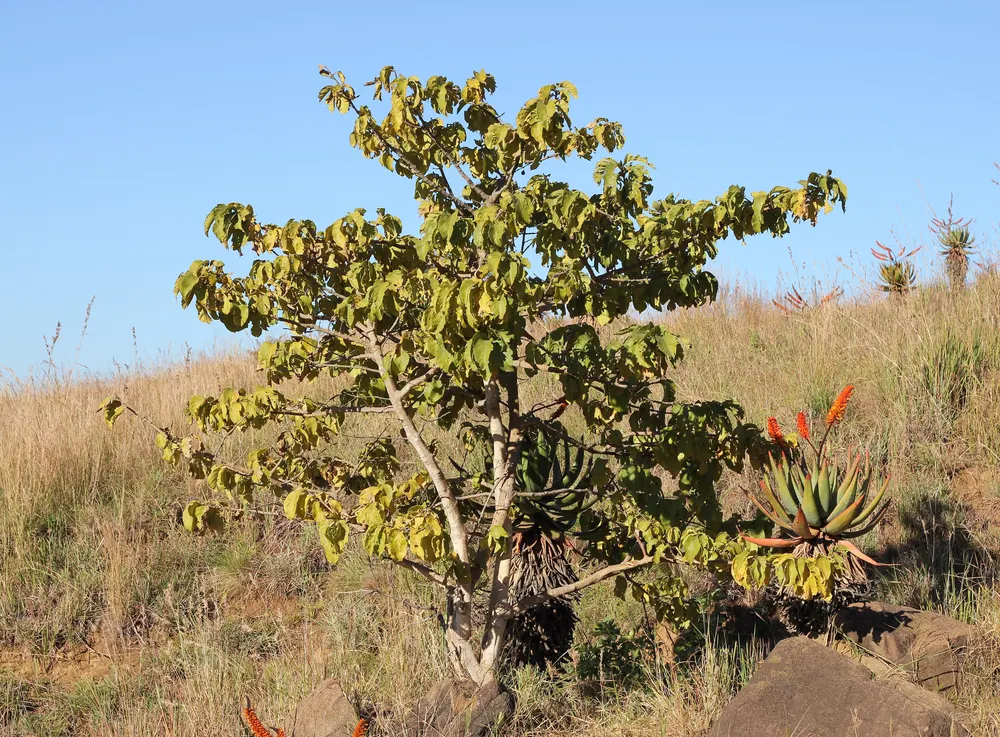
Photo: JMK, CC BY-SA 4.0 (via Wikimedia Commons)
Wild Medlar
Vangueria infausta
Also known as Mmilo, Mviyo, Wild Loquat, African Medlar
Key benefits
✦Traditional uses
✦Long before orchards and markets, the wild medlar fed travelers and herders across the drylands of southern and eastern Africa, its brown, apple-scented fruit gathered straight from the branch or scooped up beneath the tree once fallen. Communities across the region, from Zulu and Tswana homesteads to villages in Zimbabwe and Malawi, have traditionally turned to a bark or root decoction for settling the stomach and easing digestive upset, while crushed leaves have been used as a wash for cleaning wounds and skin irritations. The tree's dense, termite-resistant wood was traditionally carved into digging sticks and tool handles, making the wild medlar as useful in the toolshed as it was at the table.
How to grow & use it
✦The full apothecary for Wild Medlar
Traditional remedies and step-by-step preparations, a complete growing guide, and how to harvest, dry, and store it, all unlocked with HerbLens Unlimited.
- ✦Remedies & preparations
- ✦ Growing guide
- ✦Harvest & storage
From under $6 a month. Free plant identifications always included.
- ✦Wild sage (Lippia)
- ✦Honey
- ✦Rooibos
- ✦European medlar
- ✦Hawthorn
“For the taste of the African bush and a stomach that needs settling the old way.”
The species name infausta is Latin for unlucky, and in parts of its native range the wild medlar carries old folklore as an unfortunate tree, one some households traditionally avoided planting too close to the home despite prizing its fruit from the wild.
The ripe fruit is fine to eat, but unripe fruit is very astringent and best avoided. Bark and root preparations are stronger and not recommended during pregnancy or breastfeeding.