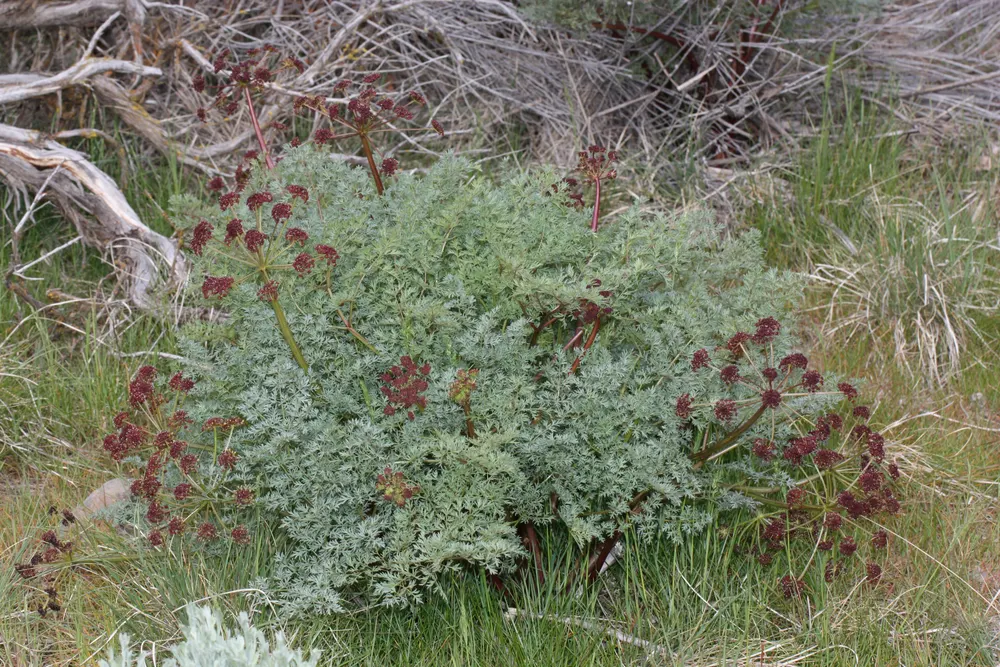
Photo: Walter Siegmund (talk), CC BY-SA 3.0 (via Wikimedia Commons)
Lomatium
Lomatium dissectum
Also known as Biscuitroot, Toza, Desert Parsley, Fernleaf Biscuitroot, Indian Balsam
Key benefits
✦Traditional uses
✦Lomatium's thick, pungent root was one of the most valued medicines among Great Basin and Plateau peoples, including the Washoe, Northern Paiute, Shoshone, and Nez Perce, who dug it for coughs, colds, and lung troubles long before settlers arrived. It carries a well-known story from the 1917 to 1919 influenza pandemic, when a Nevada physician reportedly noticed that Washoe patients treated with lomatium root fared better than others, a tale that cemented its reputation as a serious respiratory herb in Western herbalism. Beyond the lungs, the mashed or chewed root was also applied to cuts, sores, and aching joints as a warming poultice.
How to grow & use it
✦The full apothecary for Lomatium
Traditional remedies and step-by-step preparations, a complete growing guide, and how to harvest, dry, and store it, all unlocked with HerbLens Unlimited.
- ✦Remedies & preparations
- ✦ Growing guide
- ✦Harvest & storage
From under $6 a month. Free plant identifications always included.
- ✦Osha root
- ✦Echinacea
- ✦Elderberry
- ✦Osha root
- ✦Angelica root
“When a cold settles into the chest and you want the root that desert peoples turned to first.”
The genus name Lomatium comes from the Greek word for 'bordered,' a nod to the thin, papery wings that edge the plant's flat seeds, which help them ride the wind across the open desert.
Lomatium can trigger a delayed, full-body rash with prolonged or higher-dose use, and its fresh root sap can cause skin irritation or sun-triggered blistering. It grows alongside truly deadly look-alikes like poison hemlock and water hemlock, so wildcrafting should only be done with expert guidance. It is best avoided during pregnancy, breastfeeding, or with autoimmune conditions.