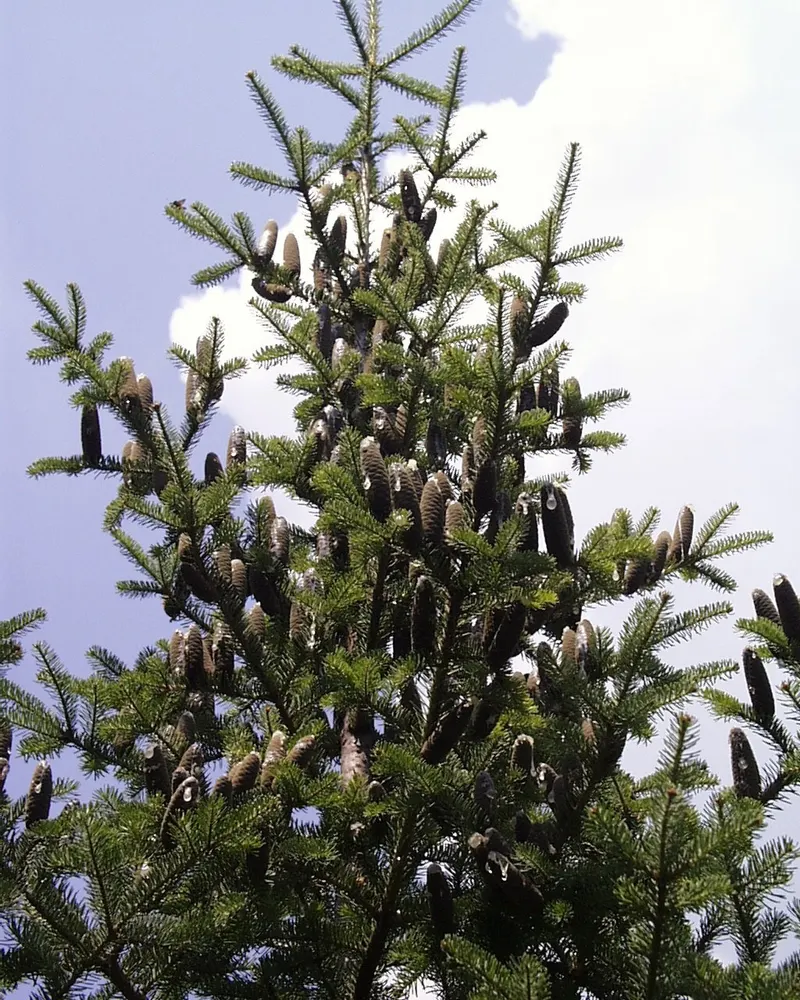
Photo: U.S. Fish and Wildlife Service, Public domain (via Wikimedia Commons)
Balsam Fir
Abies balsamea
Also known as Canada Balsam, Balm of Gilead Fir, Blister Pine, Balsam
Key benefits
✦Traditional uses
✦Long before it became a beloved Christmas tree, balsam fir was one of the most relied upon medicine trees of the northern forest. The Ojibwe, Cree, Algonquin, and other northeastern nations gathered the sticky resin that beads up in bark blisters and pressed it directly onto cuts, burns, and sores as a natural sealant, and steeped the young needles into a sharp, resinous tea for coughs, sore throats, and the aches of a winter cold. Voyageurs and early settlers picked up the same habits from their Indigenous neighbors, calling the tree Canada balsam and carrying its resin as a trail remedy for chest complaints. Even the smell of it, sharp and green and a little sweet, was considered clearing and restorative simply to breathe in.
How to grow & use it
✦The full apothecary for Balsam Fir
Traditional remedies and step-by-step preparations, a complete growing guide, and how to harvest, dry, and store it, all unlocked with HerbLens Unlimited.
- ✦Remedies & preparations
- ✦ Growing guide
- ✦Harvest & storage
From under $6 a month. Free plant identifications always included.
- ✦Spruce tips
- ✦Pine needle
- ✦Wild ginger
- ✦Eastern white pine
- ✦Black spruce
“For the scent of cold pine air, sticky fingers, and a tea that tastes like the deep woods in a cup.”
The clear, glassy resin of balsam fir was once so prized for its optical clarity that it was used well into the twentieth century to mount specimens on microscope slides and to cement lenses in telescopes and cameras, a scientific afterlife far from its origins as a forest remedy.
Balsam fir resin can irritate skin or trigger allergic contact dermatitis in sensitive people, so the essential oil should never be taken internally and should always be diluted before skin contact. Correctly identify the plant before using needle tea, since other evergreens in the same regions include toxic yew.