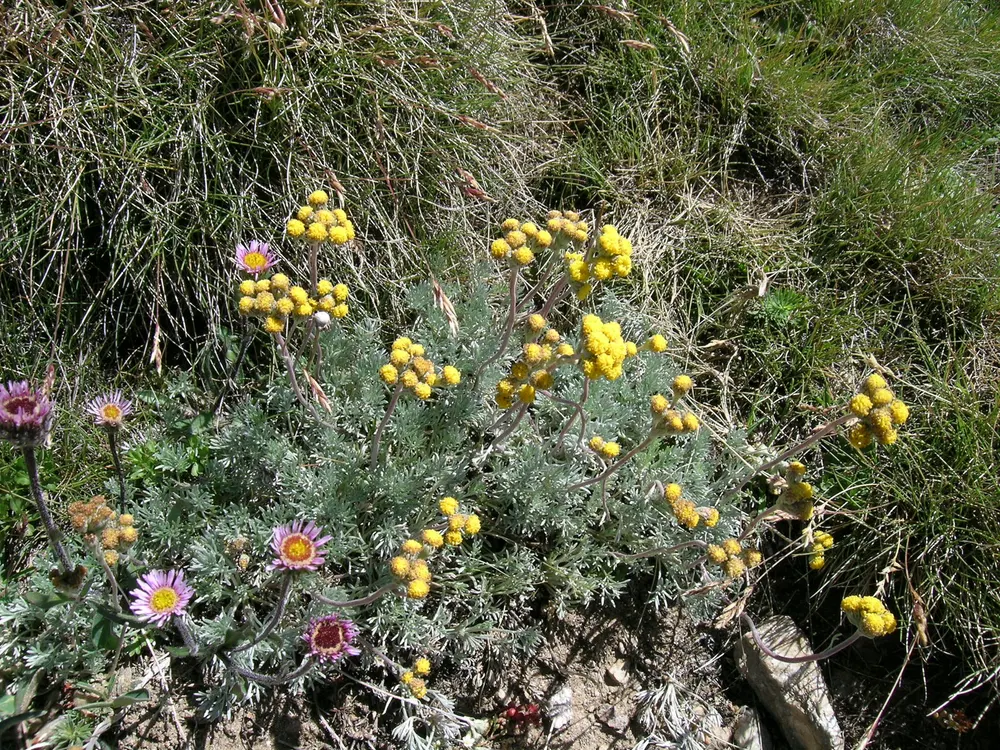
Photo: No machine-readable author provided. Thommybe assumed (based on copyright claims)., CC BY-SA 3.0 (via Wikimedia Commons)
Glacier Wormwood
Artemisia glacialis
Also known as Genepì, Génépi, Glacier Artemisia, Ice Wormwood, Alpine Wormwood
Key benefits
✦Traditional uses
✦High in the Alps, where almost nothing else can take hold in the loose scree, generations of shepherds and mountain travelers came to know this small silvery plant as a lifeline. Sprigs were tucked into pockets or steeped into a bitter tea to settle the stomach after heavy mountain meals, and to ward off the light-headedness and chill of high altitude. It is best known today as the heart of genepì, the fragrant alpine liqueur that villages across the French and Italian Alps have distilled by hand for centuries, a tradition born from the same instinct that first made this humble herb a trusted companion of anyone who worked the high passes. Because it grows so slowly and only in such a harsh, narrow band of habitat, gathering it wild has always carried a note of reverence, and today it is protected across much of its range.
How to grow & use it
✦The full apothecary for Glacier Wormwood
Traditional remedies and step-by-step preparations, a complete growing guide, and how to harvest, dry, and store it, all unlocked with HerbLens Unlimited.
- ✦Remedies & preparations
- ✦ Growing guide
- ✦Harvest & storage
From under $6 a month. Free plant identifications always included.
- ✦Gentian root
- ✦Mint
- ✦Yarrow
- ✦Common wormwood (Artemisia absinthium)
- ✦True genepì (Artemisia umbelliformis)
“For the taste of thin mountain air and the old shepherd's remedy against the cold.”
In parts of the French and Italian Alps, picking wild genepì is now restricted or banned outright, a rare case of a folk herb becoming so beloved for its liqueur that law had to step in to protect it from its own admirers.
This plant contains thujone, which can be harmful in concentrated doses or with frequent use, so it's traditionally taken only occasionally, never as a daily tonic, and should be avoided during pregnancy and breastfeeding or with young children. Avoid it if you have a ragweed or Asteraceae allergy or take anticonvulsant medication, since thujone can interact with those drugs. Wild populations are protected across much of the Alps, so use only cultivated material.