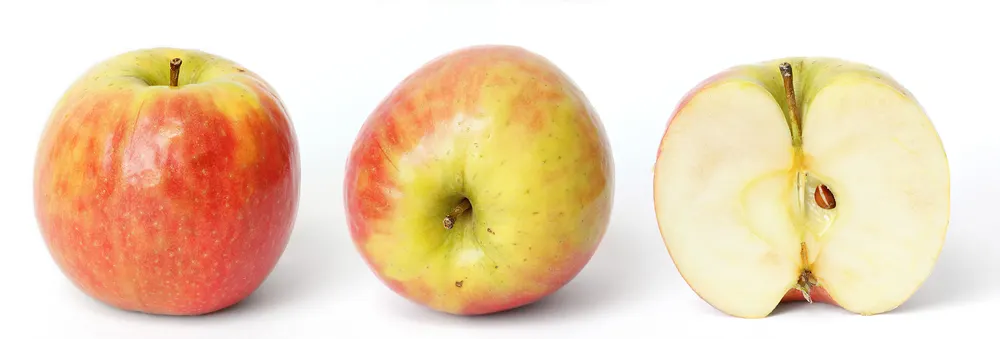
Photo: fir0002 flagstaffotos [at] gmail.com Canon 20D + Sigma 150mm f/2.8, GFDL 1.2 (via Wikimedia Commons)
Apple
Malus domestica
Also known as Common Apple, Orchard Apple, Table Apple
Key benefits
✦Traditional uses
✦Long before it was a lunchbox staple, the apple was already ancient, tracing back to the wild forests of Malus sieversii in the mountains of Kazakhstan, where bears and horses once carried the seeds along what would become the Silk Road. Medieval monasteries kept careful orchards, prizing the apple as both food and medicine, stewed for the stomach and pressed into cider for keeping through winter. The old English proverb, an apple a day keeps the doctor away, grew out of centuries of folk wisdom about the fruit's gentle, tonic qualities. In American folklore, the wandering nurseryman John Chapman, better known as Johnny Appleseed, spread apple trees across the frontier, though his seedling apples were grown mostly for cider rather than eating.
Growing guide
✦Fresh to dried
✦Traditional preparations
✦Apple Peel Tea
A mild, comforting infusion traditionally sipped after meals to ease an unsettled stomach.
How it's made. Steep the dried peel of one apple in 250 ml of just-boiled water for 8 to 10 minutes, then strain and drink warm.
Simple Stewed Apple
A soft, pectin-rich preparation long used in folk kitchens to settle a queasy stomach or ease mild digestive upset.
How it's made. Peel and simmer one apple in a small amount of water until soft, then mash lightly and eat plain and warm.
- ✦Cinnamon
- ✦Ginger
- ✦Chamomile
- ✦Pear
- ✦Quince
“When you want something wholesome, keeping, and quietly medicinal, tucked right into the fruit bowl.”
Apple seeds never grow true to their parent, so every single seed produces a genetically unique tree, which is why orchardists have grafted favorite varieties onto rootstock for thousands of years rather than growing from seed.
Apples are safe to eat; just don't chew or eat a quantity of the seeds, since they contain a compound that can release cyanide.