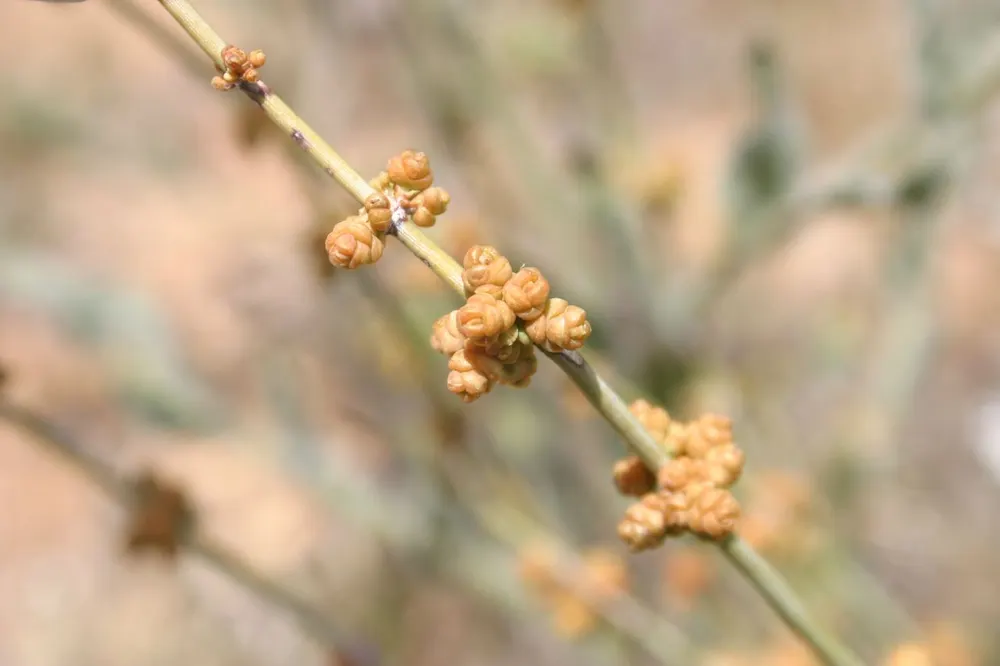
Photo: Joe Decruyenaere, CC BY-SA 2.0 (via Wikimedia Commons)
Mormon Tea
Ephedra nevadensis
Also known as Nevada Jointfir, Desert Tea, Brigham Tea, Teamster's Tea, Cañutillo
Key benefits
✦Traditional uses
✦Long before espresso and black tea reached the desert Southwest, travelers and Native peoples of the Great Basin were snapping the jointed green stems of this scrubby little shrub and simmering them into a warm, reddish brew. Paiute, Shoshone, and Navajo communities brewed the stems as a restorative drink and used it in traditional preparations to ease colds and settle the stomach after a long day. Mormon settlers crossing the desert adopted the same plant as a caffeine-free stand-in for coffee and black tea, which is how it earned the name that sticks to this day. It remains one of the most recognizable plants of the desert wash, easy to spot by its broom-like, almost leafless silhouette.
How to grow & use it
✦The full apothecary for Mormon Tea
Traditional remedies and step-by-step preparations, a complete growing guide, and how to harvest, dry, and store it, all unlocked with HerbLens Unlimited.
- ✦Remedies & preparations
- ✦ Growing guide
- ✦Harvest & storage
From under $6 a month. Free plant identifications always included.
- ✦Fresh mint
- ✦Ginger root
- ✦Orange or lemon peel
- ✦Rooibos
- ✦Ginger tea
“For a warm, earthy cup that tastes like the high desert washes it grows in.”
Mormon pioneers crossing the desert in the 1800s reportedly took to this plant as their coffee and black tea substitute, since both were discouraged by their faith, and it was that habit that gave the shrub its lasting common name.
Mormon tea belongs to the same genus as Ephedra sinica (Ma huang), the source of the stimulant ephedrine, but the American desert species, including Ephedra nevadensis, contain little to no ephedrine-type alkaloids and have a very different traditional use as a mild, everyday beverage rather than a stimulant medicine. Even so, it should not be confused with Asian ephedra products, and it is not appropriate for anyone who is pregnant or breastfeeding, has heart disease or high blood pressure, or takes MAOI or stimulant medications, since correct species identification matters and alkaloid content can vary by plant and region. It is best enjoyed occasionally rather than as a daily habit. As always, speak with a qualified healthcare provider before using it medicinally, especially if you take other medications or manage a chronic health condition.