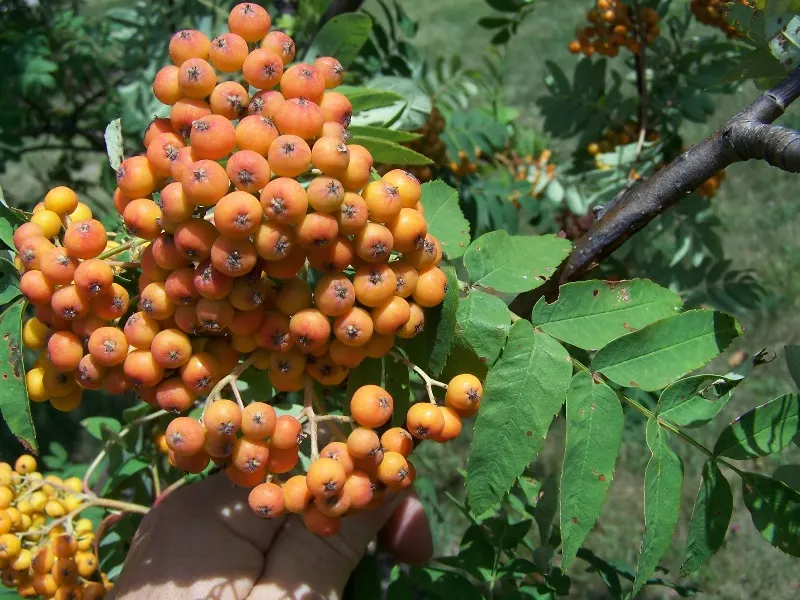
Photo: Bruce Marlin, CC BY-SA 2.5 (via Wikimedia Commons)
American Mountain-ash
Sorbus americana
Also known as Dogberry, Roundwood, American Rowan, Missey-moosey
Key benefits
✦Traditional uses
✦Long before it graced dooryards and hedgerows, American Mountain-ash held a place in Northeastern and Canadian folk tradition, where its tart, jewel-bright berries were gathered after the first frost and simmered into jellies, syrups, and cordials to see families through the cold months. The inner bark was steeped by early settlers and some Native communities into a bitter, astringent tea, traditionally taken for sore throats, coughs, and general seasonal complaints, in the same rustic vein as other Rosaceae bark and bramble remedies. Because the tree's clustered berries persist so vividly against snow, it also became a well loved marker of the changing seasons, more a household standby than a formal medicine chest herb, but a cherished one all the same. Today it is grown as much for its beauty and wildlife value as for its old kitchen uses.
Growing guide
✦Fresh to dried
✦Traditional preparations
✦Mountain-Ash Bark Tea
A rustic, astringent tea traditionally sipped for scratchy throats and seasonal chills.
How it's made. Simmer 1 teaspoon of dried, shredded inner bark in 250 ml of water for 10 minutes, then strain and sip warm, up to once daily.
Frosted Berry Cordial Tea
A tart, vitamin-rich infusion made from cooked berries, in keeping with old settler kitchen traditions.
How it's made. Simmer a small handful of frost-softened, cooked berries in 250 ml of water for 5 to 10 minutes, strain, and sweeten lightly if desired.
- ✦Rose hips
- ✦Hawthorn berry
- ✦Elderberry
- ✦Rowan (Sorbus aucuparia)
- ✦Hawthorn berry
“For the tree that turns a frosty hedgerow into a scatter of embers.”
Despite its common name, American Mountain-ash is not a true ash at all, it belongs to the rose family alongside apples and hawthorns, and its lookalike name comes only from its similarly shaped, feathery leaves.
Raw, unripe berries are tart and can upset the stomach, so cook them or wait until frost softens them before eating, and don't crush and eat the seeds in quantity.