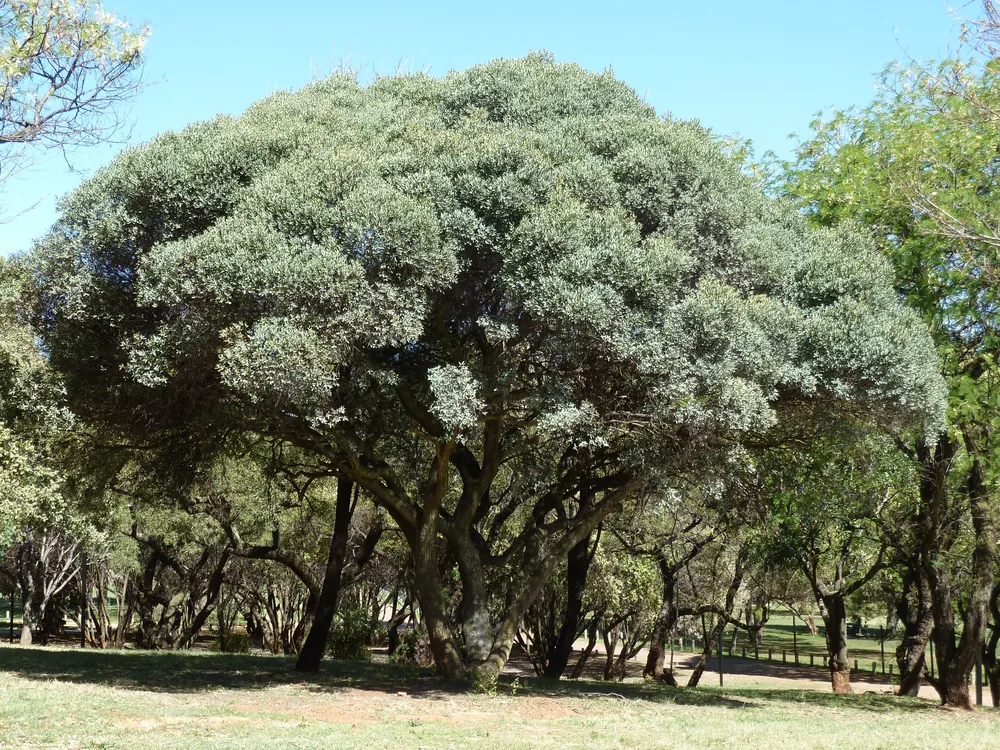
Photo: JMK, CC BY-SA 3.0 (via Wikimedia Commons)
Blue Guarri
Euclea crispa
Also known as Blue Guarri, Bergguarri, Ghwarrie
Key benefits
✦Traditional uses
✦Long before toothbrushes arrived in southern Africa, people snapped a green twig from the Blue Guarri, chewed one end into soft bristles, and used it to clean their teeth and gums, a practice shared across several Euclea species and still remembered in rural communities today. The bark and root have traditionally been simmered to draw out a reddish-brown dye, used to color grass baskets, hides, and hair. Its dense, dark, termite-resistant wood made it a trusted choice for fence posts, digging sticks, and tool handles, so the tree earned its keep as much in the toolshed as in the medicine basket.
How to grow & use it
✦The full apothecary for Blue Guarri
Traditional remedies and step-by-step preparations, a complete growing guide, and how to harvest, dry, and store it, all unlocked with HerbLens Unlimited.
- ✦Remedies & preparations
- ✦ Growing guide
- ✦Harvest & storage
From under $6 a month. Free plant identifications always included.
- ✦Buddleja salviifolia (False Olive)
- ✦Diospyros lycioides (Bluebush)
- ✦Warburgia salutaris (Pepper-bark Tree)
- ✦Euclea divinorum (Magic Guarri)
- ✦Salvadora persica (Miswak)
“For the hedge that shelters the birds, and the twig that once served as a toothbrush.”
Blue Guarri is a cousin of ebony and persimmon, and like its darker-wooded relatives it produces a hard, dense heartwood so termite-resistant that rural fence posts cut from it have been known to outlast the wire strung between them.
Blue guarri's bark and root contain naphthoquinone compounds with no established safe internal dose, so traditional use is limited to chewing the fresh twig as a chew-stick, not teas or tinctures meant to be swallowed. It's not recommended during pregnancy, breastfeeding, or for young children.