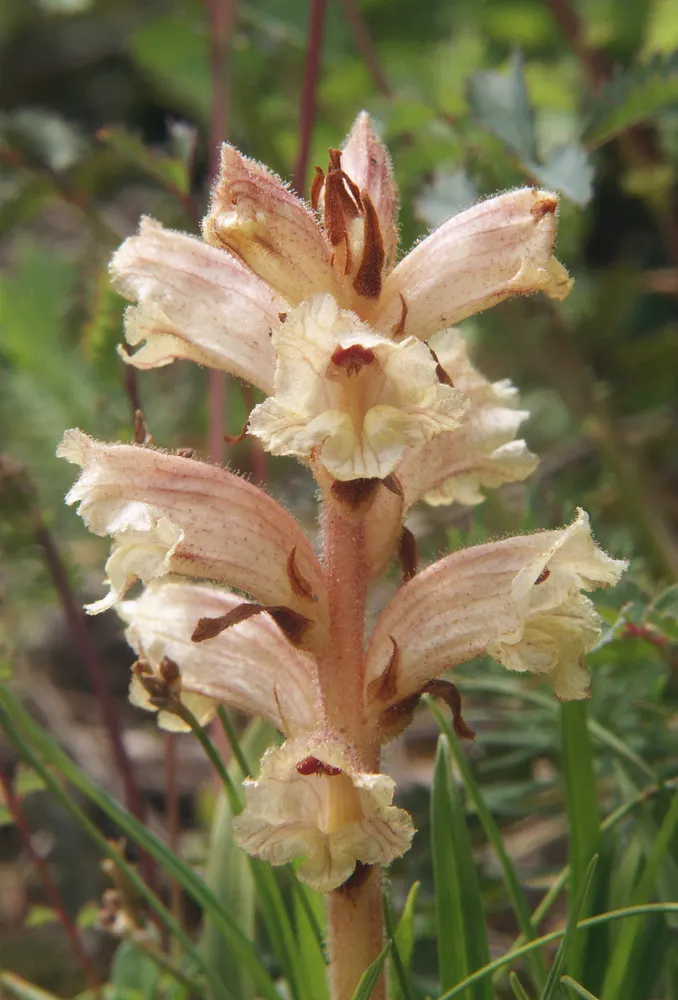
Photo: Bernd Haynold, CC BY 2.5 (via Wikimedia Commons)
White Broomrape
Orobanche alba
Also known as Thyme Broomrape, Pale Broomrape
Traditional uses
✦White Broomrape holds almost no place in the herbal record. It carries no chlorophyll of its own and survives entirely by tapping into the roots of wild thyme and other low, aromatic plants, so old field botanists knew it as a curiosity of the downs rather than a plant of the still room or apothecary shelf. What lore exists is mostly etymological: the old English name broomrape comes from the Latin rapum, meaning tuber or knob, a nod to the swollen, root-like base by which the plant clings to its host. It appears in herbals chiefly as a warning sign to farmers, since related broomrape species were feared for latching onto and weakening cultivated crops such as clover and broom.
How to grow & use it
✦The full apothecary for White Broomrape
Traditional remedies and step-by-step preparations, a complete growing guide, and how to harvest, dry, and store it, all unlocked with HerbLens Unlimited.
- ✦Remedies & preparations
- ✦ Growing guide
- ✦Harvest & storage
From under $6 a month. Free plant identifications always included.
“For the quiet thrill of finding a leafless, honey-brown spike rising alone from a thyme-scented bank, like a plant that forgot to bring its own garden.”
White Broomrape cannot photosynthesize at all. Every bit of its sugar and water is stolen from the roots of wild thyme through a specialized organ called a haustorium, which fuses the parasite's tissue directly into its host's vascular system, so the whole plant is really just a flower spike attached to someone else's roots.
White Broomrape has no meaningful history of food or medicinal use and is not eaten; it's also uncommon and sometimes protected, so it's best left undisturbed in the wild.