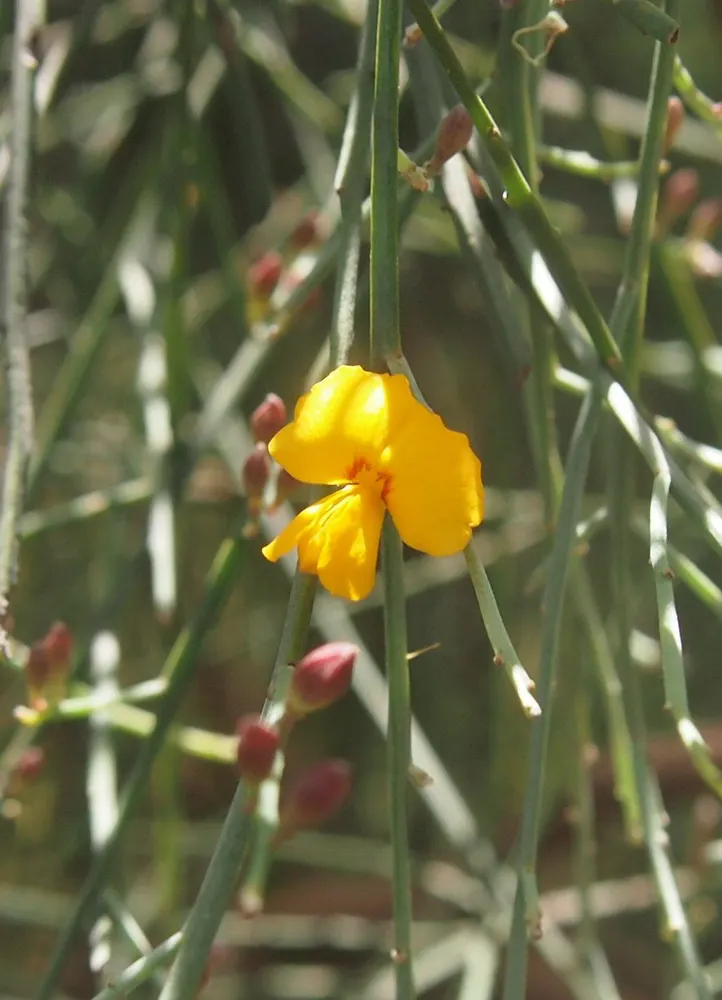
Photo: Mark Marathon, CC BY-SA 4.0 (via Wikimedia Commons)
Dogwood
Jacksonia scoparia
Also known as Winged Broom-Pea, Native Dogwood, Scrub Broom
Key benefits
✦Traditional uses
✦Jacksonia scoparia has no documented history in traditional or folk medicine, and no established culinary use has come down to us, so this entry treats it as the garden and bushland plant it truly is rather than reaching for a remedy that was never recorded. Its real legacy is written in the soil. As a fast-growing pioneer legume, it was often among the first woody plants to green a burnt hillside or a scraped roadside cutting, fixing nitrogen into thin coastal sands and holding the ground together while slower forest trees found their footing behind it. Bushland regenerators and native gardeners came to value it for exactly that toughness, a plain, hardworking shrub that asks for almost nothing and still fills with bees every spring. Its common name, shared with several unrelated Australian shrubs, most likely nods to a dense, hard-wearing timber rather than any kinship with true dogwoods of the Northern Hemisphere.
How to grow & use it
✦The full apothecary for Dogwood
Traditional remedies and step-by-step preparations, a complete growing guide, and how to harvest, dry, and store it, all unlocked with HerbLens Unlimited.
- ✦Remedies & preparations
- ✦ Growing guide
- ✦Harvest & storage
From under $6 a month. Free plant identifications always included.
“For the sunbaked, sandy corner where nothing else will settle, and the bees still need somewhere to work in spring.”
As Jacksonia scoparia matures, it often drops its small leaves altogether and carries on photosynthesizing through its flattened, wing-shaped green stems, called cladodes, a clever trick many dryland pea-family shrubs use to cut water loss through the long Australian dry season.
No documented food or medicinal use; its seed pods and other parts should not be eaten.