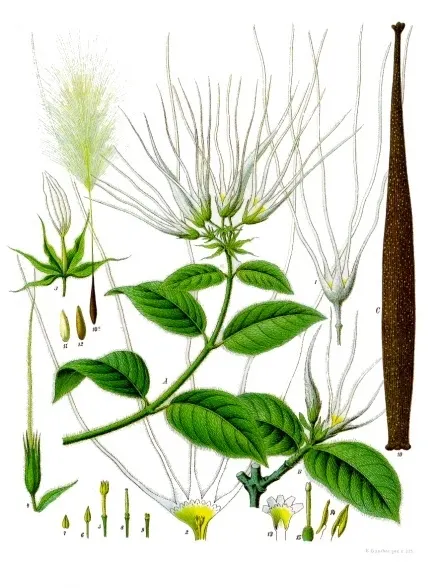
Photo: E. Günther (Drawing and lithography, living in Gera, probably Ernst Günther), Public domain (via Wikimedia Commons)
Hairy Strophanthus
Strophanthus hispidus
Also known as Arrow Poison Vine, West African Strophanthus, Poison Rope
Key benefits
✦Traditional uses
✦Long before it entered any scientific journal, Strophanthus hispidus was known to hunters across the savannas of West Africa, who ground its seeds into a paste to coat arrow and dart tips, relying on its cardiac-stopping power to bring down large game. In the mid-1800s, the explorer and naturalist Sir John Kirk, traveling with David Livingstone's expedition, observed this poison in use and carried seed samples home to Edinburgh, where they became one of the founding case studies of modern pharmacology. The glycosides isolated from Strophanthus seeds went on to shape early scientific understanding of how the heart responds to plant compounds, work that quietly influenced the development of cardiac medicine for a century afterward. None of this history makes the plant safe to use at home; it remains a striking example of a species valued entirely for study and caution rather than for the kitchen or the tea cupboard.
How to grow & use it
✦The full apothecary for Hairy Strophanthus
Traditional remedies and step-by-step preparations, a complete growing guide, and how to harvest, dry, and store it, all unlocked with HerbLens Unlimited.
- ✦Remedies & preparations
- ✦ Growing guide
- ✦Harvest & storage
From under $6 a month. Free plant identifications always included.
“A plant to admire only from a respectful distance, its trailing cream flowers hiding seeds potent enough to still a heart.”
When Sir John Kirk brought Strophanthus seeds back from Africa in the 1860s, the pharmacologist Thomas Fraser spent years isolating and testing their active compound, eventually identifying strophanthin, work now remembered as one of the first rigorous scientific studies linking a specific plant chemical to its effect on the human heart.
Strophanthus hispidus is a genuinely dangerous plant and no part of it should ever be eaten, brewed, or applied at home. Its seeds contain potent cardiac glycosides, chiefly strophanthin, which disrupt the heart's electrical rhythm and can cause fatal cardiac arrest even in small amounts; this is the same family of compounds found in foxglove and oleander, only more concentrated. For generations, West African hunters and, in some regions, practitioners of trial by ordeal used crushed seed paste as a lethal arrow and dart poison, precisely because of how reliably it stops the heart. The plant is also considered toxic to livestock and pets if browsed. It can interact dangerously with heart medications, including other cardiac glycosides like digoxin, and there is no safe traditional dose for ingestion. Handling seeds or sap with bare skin or open cuts is also inadvisable. This entry is included for botanical and historical reference only. If you suspect any exposure to a person, animal, or child, treat it as a medical emergency and contact a poison control center or physician immediately rather than attempting any home remedy.