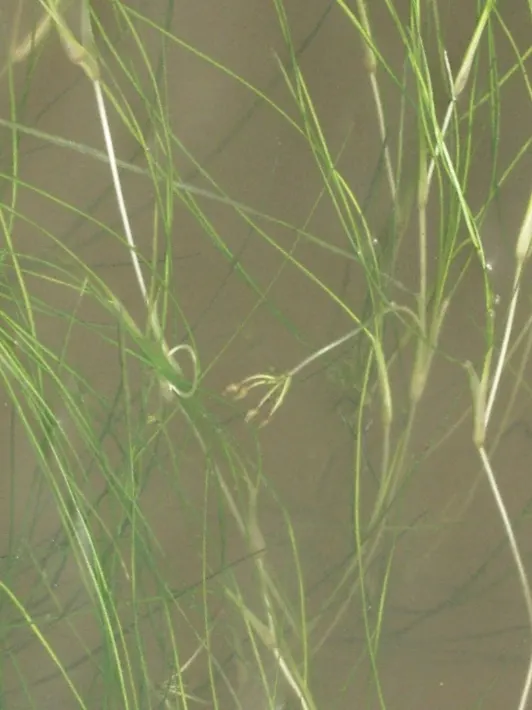
Photo: Ruppia2000, CC BY-SA 3.0 (via Wikimedia Commons)
Widgeongrass
Ruppia maritima
Also known as Ditch Grass, Wigeon Grass, Sea Tassel, Beaked Ditchgrass
Key benefits
✦Traditional uses
✦Widgeongrass has never held a place in the herbalist's cabinet or the cook's kitchen, but it has long been known to hunters, fishermen, and coastal naturalists as one of the quiet keystones of the tidal world. Its thread-like leaves and seeds are a favorite food of dabbling ducks, especially the wigeon that gave the plant its common name, and old waterfowling guides speak of following the grass beds to find the birds. Where it grows thick, it has traditionally been read as a sign of a healthy, fishable estuary, since young shrimp, crabs, and fish fry shelter in its tangled underwater meadows.
How to grow & use it
✦The full apothecary for Widgeongrass
Traditional remedies and step-by-step preparations, a complete growing guide, and how to harvest, dry, and store it, all unlocked with HerbLens Unlimited.
- ✦Remedies & preparations
- ✦ Growing guide
- ✦Harvest & storage
From under $6 a month. Free plant identifications always included.
- ✦Eelgrass
- ✦Sea Lavender
- ✦Glasswort
- ✦Eelgrass (Zostera marina) in similar coastal restoration contexts
“You want to picture a hidden meadow swaying beneath the tide, feeding the ducks overhead and the fish below.”
Widgeongrass is pollinated underwater and at the surface rather than by insects. Its pollen grains are thread-shaped and drift on the water's skin to find a mate, a strategy called hydrophily that only a small handful of flowering plants on Earth ever evolved.
Not known to be toxic, but it isn't an established food or medicine and can absorb pollutants from the water it grows in, so it shouldn't be eaten.