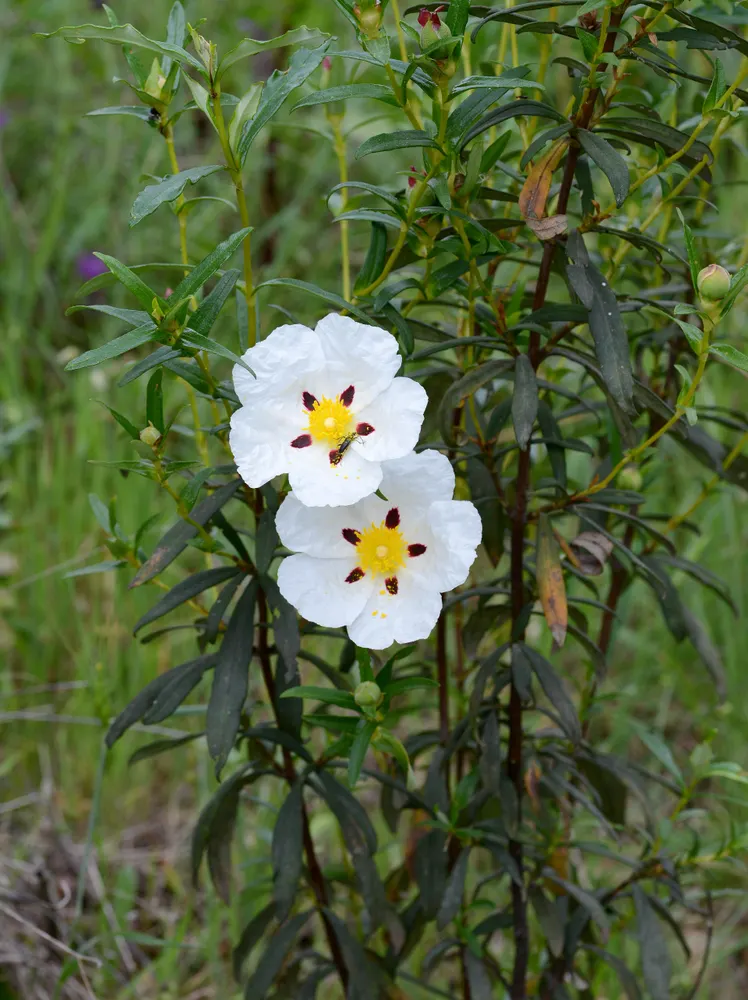
Photo: Alvesgaspar, CC BY-SA 4.0 (via Wikimedia Commons)
Labdanum (Rockrose)
Cistus ladanifer
Also known as Rockrose, Gum Rockrose, Ladanum, Cistus, Spanish Cistus
Key benefits
✦Traditional uses
✦Long before it perfumed a bottle, labdanum resin was gathered on the hillsides of Spain, Crete, and Cyprus and burned as incense in temples across the ancient Mediterranean, prized as a warm, amber-like note thought by some scholars to be the biblical stacte. Mediterranean folk tradition also turned to the sticky gum topically, worked into simple balms for rough skin and minor scrapes, and its smoke was inhaled as a comforting home remedy for coughs and stuffy chests. Because the resin travels well and keeps its scent for years, it became one of antiquity's most treasured trade goods, carried along with frankincense and myrrh.
How to grow & use it
✦The full apothecary for Labdanum (Rockrose)
Traditional remedies and step-by-step preparations, a complete growing guide, and how to harvest, dry, and store it, all unlocked with HerbLens Unlimited.
- ✦Remedies & preparations
- ✦ Growing guide
- ✦Harvest & storage
From under $6 a month. Free plant identifications always included.
- ✦Frankincense
- ✦Myrrh
- ✦Sandalwood
- ✦Benzoin resin
- ✦Myrrh resin
“For the scent of a sun-scorched hillside, warm, resinous, and a little wild, bottled in a single sticky leaf.”
Ancient resin gatherers did not always pick labdanum from the plant itself. Herodotus described shepherds combing the sticky, fragrant gum straight from the beards and legs of goats that had spent the day brushing past rockrose bushes, later using a rake-like tool called a ladanisterion to harvest it more efficiently.
Labdanum resin and oil are used on the skin and in incense, not eaten, and can irritate skin or trigger reactions in people with fragrance sensitivities. Dilute before topical use and patch test first.