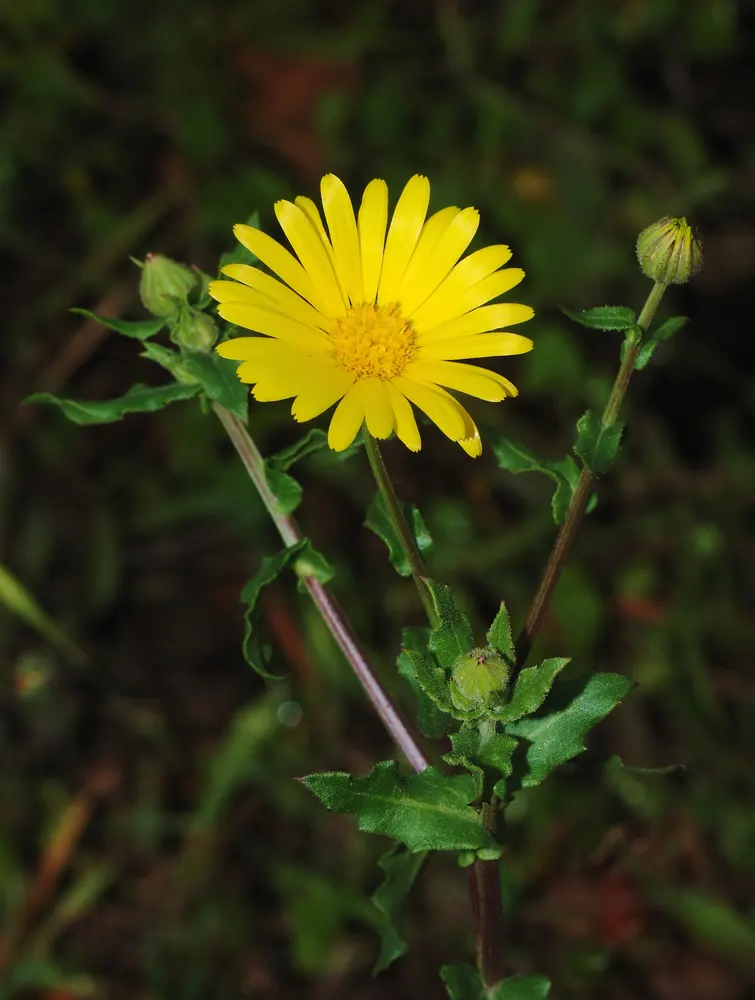
Photo: Alvesgaspar, CC BY-SA 3.0 (via Wikimedia Commons)
Field Marigold
Calendula arvensis
Also known as Wild Marigold, Corn Marigold (regional), Marigold of the Fields
Key benefits
✦Traditional uses
✦Field marigold is the smaller, wilder cousin of the pot marigold seen in cottage gardens everywhere, and it grew up doing much the same work. Across the Mediterranean countryside, its bright open blossoms were gathered by hand and pressed into oils and washes for everyday skin troubles, the kind of humble first aid kept in nearly every farmhouse kitchen. Because it self-seeds readily along field edges and old walls, it was often the marigold people simply found growing nearby rather than one they had to plant, a free bit of golden medicine at the roadside. Old herbals frequently spoke of Calendula in general terms for the skin and for lifting the spirits with its cheerful color, and field marigold shared fully in that reputation.
How to grow & use it
✦The full apothecary for Field Marigold
Traditional remedies and step-by-step preparations, a complete growing guide, and how to harvest, dry, and store it, all unlocked with HerbLens Unlimited.
- ✦Remedies & preparations
- ✦ Growing guide
- ✦Harvest & storage
From under $6 a month. Free plant identifications always included.
- ✦Chamomile
- ✦Plantain
- ✦Lavender
- ✦Pot marigold (Calendula officinalis)
“For the small golden flower that turned up at the field's edge and became the farmhouse remedy for scraped knees and chapped hands.”
The genus name Calendula comes from the Latin calendae, meaning the first day of the month, because the Romans noticed its close relatives seemed to bloom in nearly every one of them.
No significant toxicity is documented for field marigold, but as a member of the daisy family it can cause skin or allergic reactions in people sensitive to ragweed or chrysanthemums. It hasn't been well studied for use in pregnancy or breastfeeding, so avoid internal use during those times.