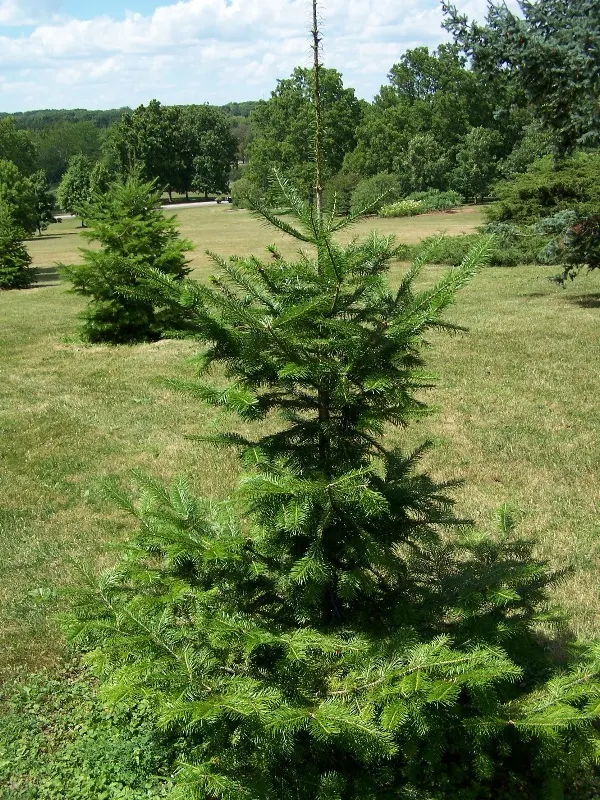
Photo: Bruce Marlin, CC BY-SA 3.0 (via Wikimedia Commons)
Khingan Fir
Abies nephrolepis
Also known as Manchurian Fir, Needle Fir, Khingan Fir
Key benefits
✦Traditional uses
✦Long before citrus reached the forests of the Russian Far East and Manchuria, hunters and villagers turned to the Khingan fir to get through the cold months. Its young needles were steeped into a sharp, resinous tea that folk tradition credited with staving off the fatigue and gum troubles of a hard winter, a practical answer to short growing seasons and long stretches without fresh fruit. The soft resin that beads on its bark was traditionally dabbed onto small cuts and scrapes, and armfuls of its fragrant boughs were tossed into steam baths to ease a stuffy head. It remains, above all, a tree of practical, everyday household use rather than formal medicine.
How to grow & use it
✦The full apothecary for Khingan Fir
Traditional remedies and step-by-step preparations, a complete growing guide, and how to harvest, dry, and store it, all unlocked with HerbLens Unlimited.
- ✦Remedies & preparations
- ✦ Growing guide
- ✦Harvest & storage
From under $6 a month. Free plant identifications always included.
- ✦Spruce tips
- ✦Elderberry
- ✦Thyme
- ✦Douglas fir
- ✦White pine
“When the air turns sharp and winter closes in, reach for the fir.”
The Khingan fir takes its name from the Greater and Lesser Khingan mountain ranges of Manchuria, where it was first formally described, and its needles have historically carried more vitamin C by weight than many citrus fruits, which is exactly why forest travelers in Siberia and the Russian Far East relied on them to get through scurvy-prone winters.
Khingan Fir needles are generally safe as a traditional tea or steam in modest amounts, but correct identification matters, since true firs can be confused with yew, a genuinely toxic conifer. Some people develop skin irritation from handling the resin, and those with conifer pollen allergies may react to the needles.