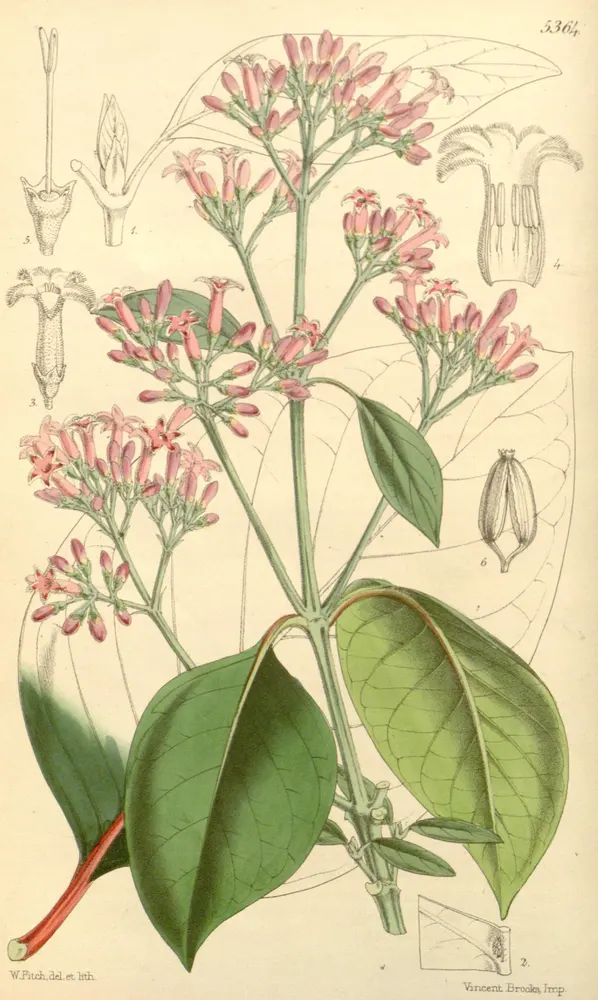
Photo: Bentham-Moxon Trust.; Curtis, William; Curtis's botanical magazine dedications, 1827-1927 : portraits and biographical notes.; Royal Botanic Gardens, Kew.; Stanley Smith Horticultural Trust., Public domain (via Wikimedia Commons)
Peruvian Bark
Cinchona officinalis
Also known as Cinchona, Jesuit's Bark, Fever Tree, Quina, Quinquina
Key benefits
✦Traditional uses
✦For centuries, Quechua healers in the Andes understood the bitter bark of the cinchona tree as a treatment for chills and fever, knowledge that Jesuit missionaries carried back to Europe in the 1600s, where it became famous as Jesuit's Bark. Its alkaloid quinine, isolated in 1820, went on to become the first effective treatment for malaria and one of the most consequential plant discoveries in medical history, saving countless lives across the tropics. That same bitterness later found a gentler second life flavoring tonic water and aperitif bitters. Its story is one of genuine medical triumph, but also of a plant potent enough that its use has always required careful, professional hands rather than a kitchen shelf.
How to grow & use it
✦The full apothecary for Peruvian Bark
Traditional remedies and step-by-step preparations, a complete growing guide, and how to harvest, dry, and store it, all unlocked with HerbLens Unlimited.
- ✦Remedies & preparations
- ✦ Growing guide
- ✦Harvest & storage
From under $6 a month. Free plant identifications always included.
- ✦Gentian root
- ✦Orange peel
- ✦Angostura bark
- ✦Sweet wormwood (Artemisia annua), the modern herbal antimalarial
- ✦Willow bark, for traditional fever support without cinchona's risks
“The fever tree whose bitter bark once decided which empires survived the tropics and which did not.”
When British colonists in India found powdered cinchona bark too bitter to swallow on its own, they began mixing it with soda water and sugar, which is how tonic water, and eventually the gin and tonic, came into being.
Cinchona bark and its alkaloids, including quinine, are genuinely toxic with a narrow margin between a helpful and harmful dose; overuse can cause ringing ears, vision or hearing loss, dangerous heart rhythm disturbances, and severe allergic reactions. It is contraindicated in pregnancy and interacts seriously with heart medications and blood thinners. This is not safe for home use, and malaria requires physician-directed treatment, not self-treatment with this plant.