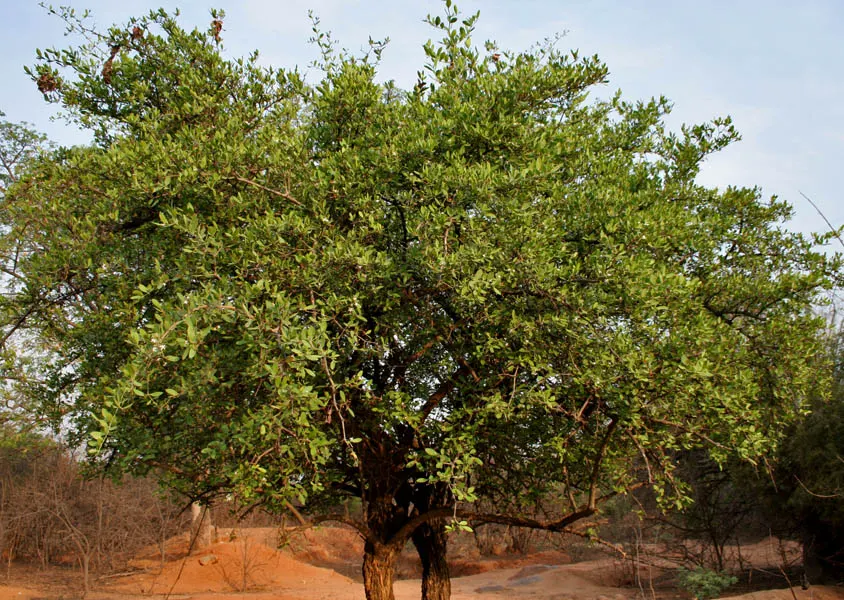
Photo: J.M.Garg, CC BY 3.0 (via Wikimedia Commons)
Conkerberry
Carissa spinarum
Also known as Num-num, Bush Plum, Wild Karanda, Simple-spined Num-num
Key benefits
✦Traditional uses
✦Long before it ever reached a plant nursery tag, Carissa spinarum grew as a thorny, fruit-bearing sentinel across the dry woodlands of Africa, Arabia, South Asia, and northern Australia, where foraging communities prized its ripe, plum-like berries as a trailside snack and a base for jams and fermented drinks. In East African, Ayurvedic, and Aboriginal Australian traditions, parts of the shrub, especially the root and bark, were worked into folk preparations for coughs, fevers, aches, and wounds, though these were potent, closely guarded remedies rather than everyday teas. Its dense, viciously forked thorns also made it a favorite living fence, planted or simply left standing to pen livestock and keep intruders out of gardens and kraals. Today it survives mostly as a forager's fruit and a hedge plant, its heavier medicinal history remembered but rarely revived.
How to grow & use it
✦The full apothecary for Conkerberry
Traditional remedies and step-by-step preparations, a complete growing guide, and how to harvest, dry, and store it, all unlocked with HerbLens Unlimited.
- ✦Remedies & preparations
- ✦ Growing guide
- ✦Harvest & storage
From under $6 a month. Free plant identifications always included.
- ✦Tamarind
- ✦Wild jujube (Ziziphus)
- ✦Hibiscus
- ✦Natal plum (Carissa macrocarpa)
- ✦Ziziphus mauritiana
“For a thorn-crowned hedge that guards the garden by day and hands over sweet, dark fruit by dusk.”
Carissa spinarum belongs to the same family, Apocynaceae, as the notorious poison-arrow shrub Acokanthera, and across parts of its range its roots were once handled with the same wary respect, wrapped in ritual and rationed by traditional healers rather than brewed as a casual tea.
Only fully ripe, soft, dark purple-black fruit should be eaten, and only when identification is certain, since the dogbane family includes toxic look-alikes. Unripe fruit and the sap are bitter and can irritate the mouth and stomach. The root and bark contain cardiac-glycoside compounds traditionally used only in small, healer-guided doses, and should be avoided during pregnancy, nursing, or with heart medication like digoxin.