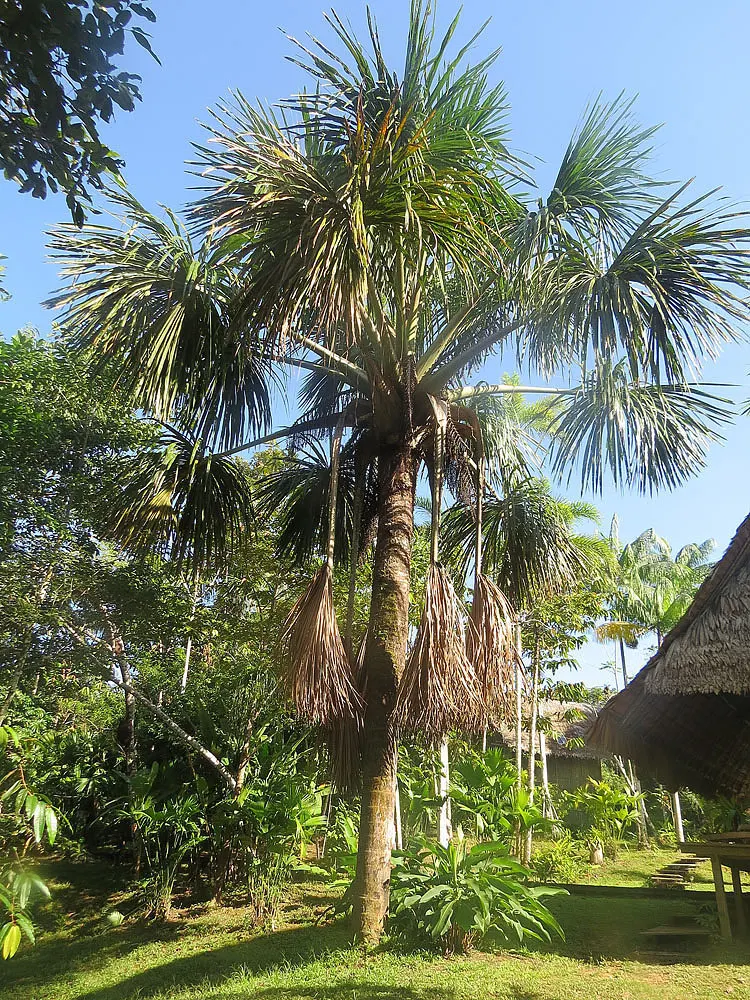
Photo: Dick Culbert from Gibsons, B.C., Canada, CC BY 2.0 (via Wikimedia Commons)
Buriti Palm
Mauritia flexuosa
Also known as Tree of Life, Moriche Palm, Aguaje (Peru), Canangucho (Colombia), Miriti
Key benefits
✦Traditional uses
✦Along the flooded rivers of the Amazon, the buriti palm has long been called the tree of life, because almost nothing about it goes to waste. Indigenous and riverside communities across the basin have gathered its deep red-orange fruit for food, pressed its pulp into a golden oil for the skin, tapped its sap for a mild fermented drink, and woven its fibers into hammocks, baskets, and rope. The oil in particular has traditionally been used to soothe sun-parched skin, calm burns, and help wounds heal, its color and richness attributed to the same carotenoids that made the fruit prized for supporting eyesight and vitality long before vitamin A had a name.
How to grow & use it
✦The full apothecary for Buriti Palm
Traditional remedies and step-by-step preparations, a complete growing guide, and how to harvest, dry, and store it, all unlocked with HerbLens Unlimited.
- ✦Remedies & preparations
- ✦ Growing guide
- ✦Harvest & storage
From under $6 a month. Free plant identifications always included.
- ✦Camu camu
- ✦Copaiba
- ✦Acai
- ✦Red palm oil
- ✦Rosehip oil
“For skin that misses the deep golden richness of the Amazon's tree of life.”
A single buritizal, or stand of buriti palms, can support an entire local food web, with macaws, monkeys, and fish all feeding on the fallen fruit, which is why river communities sometimes call the buriti the tree that feeds the forest.
Buriti fruit and oil are widely eaten as food and considered safe; if using the oil on skin, patch test first since rare sensitivities can occur.