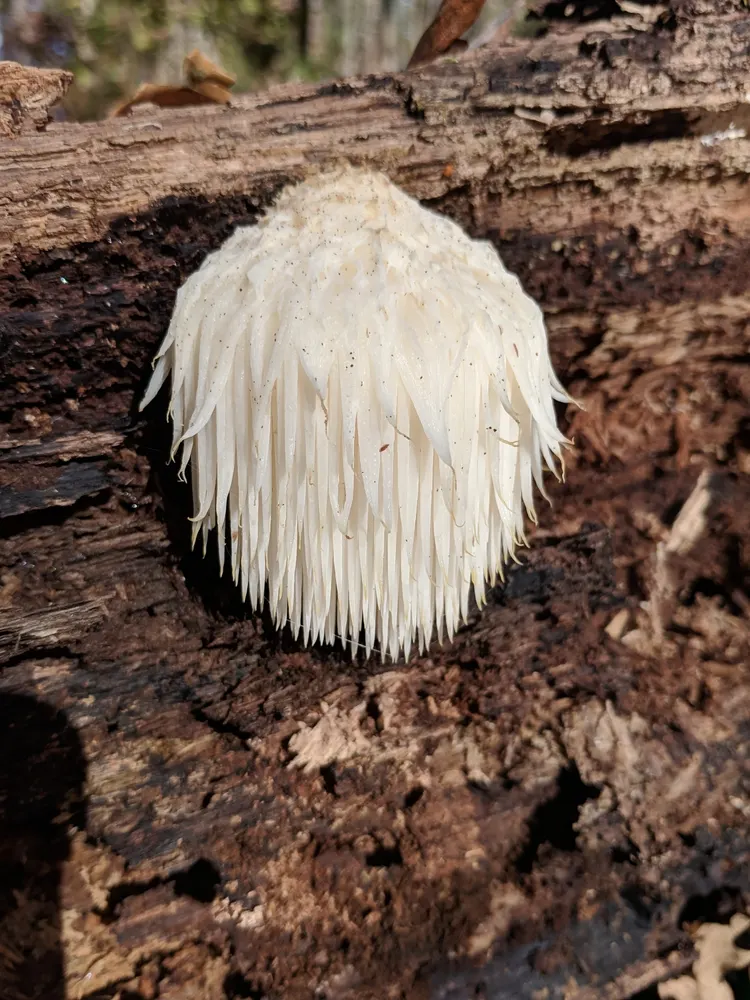
Photo: (c) Alison Northup, some rights reserved (CC BY), CC BY 4.0 (via Wikimedia Commons)
Lion's Mane
Hericium erinaceus
Also known as Bearded Tooth, Monkey Head Mushroom, Pom Pom Mushroom, Bearded Hedgehog, Yamabushitake
Key benefits
✦Traditional uses
✦Long before it appeared in wellness shops, lion's mane was simmered into soups and wine by Buddhist monks in China, who valued it for steadying the mind during long hours of meditation. In Japan it took the name yamabushitake, after the yamabushi mountain ascetics whose shaggy white robes it was said to resemble. Traditional Chinese medicine has used it to support the stomach and spleen and to ease digestive complaints, while folk healers across East Asia prized it as a tonic for memory and nerve strength. Its dramatic, cascading form made it as much a curiosity of the forest as a remedy, gathered wherever a fallen oak or beech offered it a place to grow.
How to grow & use it
✦The full apothecary for Lion's Mane
Traditional remedies and step-by-step preparations, a complete growing guide, and how to harvest, dry, and store it, all unlocked with HerbLens Unlimited.
- ✦Remedies & preparations
- ✦ Growing guide
- ✦Harvest & storage
From under $6 a month. Free plant identifications always included.
- ✦Reishi
- ✦Astragalus
- ✦Ginger
- ✦Turkey Tail
- ✦Maitake
“For the quiet clarity of an old forest, gathered from the wound of a fallen oak.”
Lion's mane is one of the few mushrooms known to grow almost entirely from a single wound in a tree trunk, spreading outward as a single cascading mass rather than the caps and gills typical of most fungi.
Those with mushroom allergies should introduce it cautiously. It may interact with blood-thinning or blood-sugar medication, and safety in pregnancy hasn't been established.