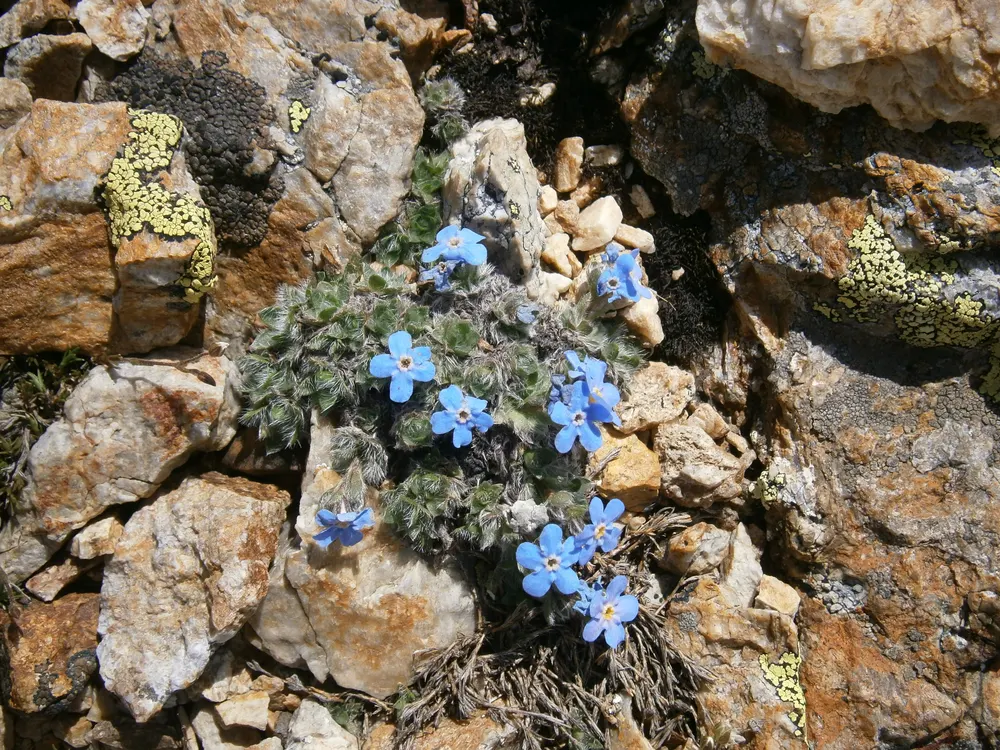
Photo: Meneerke bloem (talk · contribs), CC BY-SA 3.0 (via Wikimedia Commons)
King of the Alps
Eritrichium nanum
Also known as Alpine Forget-me-not (informal)
Key benefits
✦Traditional uses
✦Eritrichium nanum has no real history in the herbalist's cabinet. Its story instead belongs to mountaineers and alpine botanists, who for centuries have prized it as one of the most coveted sights in the high peaks, a jewel-blue flower found only where the air thins and few other plants dare root. Its common name, King of the Alps, reflects the near-mythic status it holds among rock gardeners and climbers, many of whom consider spotting or successfully growing it a lifetime achievement rather than a remedy to be gathered.
How to grow & use it
✦The full apothecary for King of the Alps
Traditional remedies and step-by-step preparations, a complete growing guide, and how to harvest, dry, and store it, all unlocked with HerbLens Unlimited.
- ✦Remedies & preparations
- ✦ Growing guide
- ✦Harvest & storage
From under $6 a month. Free plant identifications always included.
“For the climbers and rock gardeners who chase true blue to the edge of the snowline, not for the medicine cabinet.”
Eritrichium nanum is considered one of the most difficult alpine plants in the world to cultivate, so much so that alpine gardening enthusiasts sometimes call successfully flowering it the sport's equivalent of summiting a mountain.
This alpine wildflower has no history of culinary or medicinal use and, as a member of the borage family, may contain liver-toxic pyrrolizidine alkaloids, so it shouldn't be ingested. It's also protected in much of its native range, so leave it undisturbed.