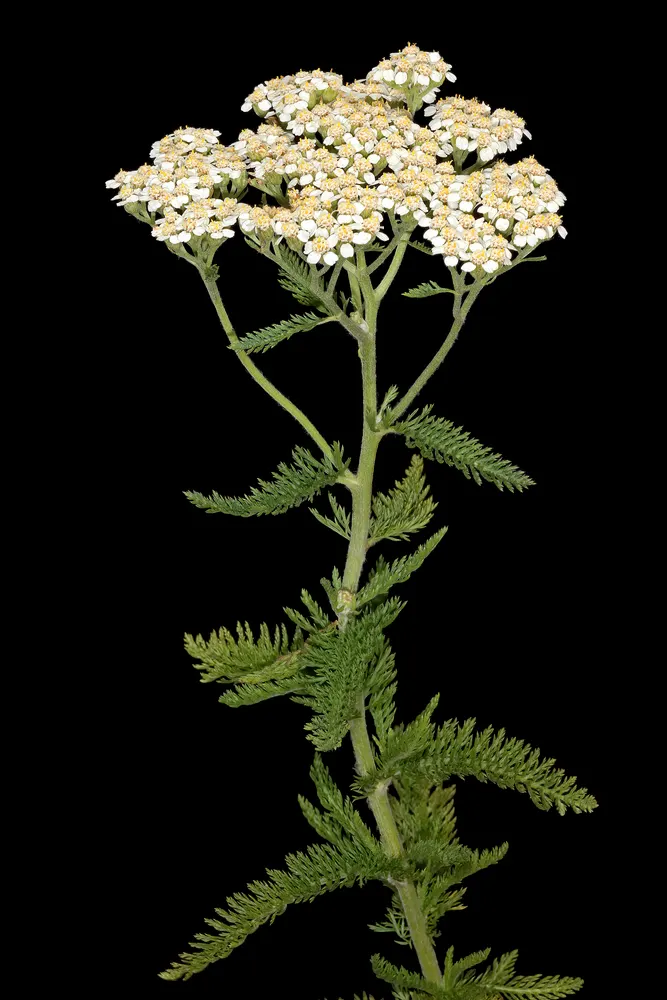
Photo: SAplants, CC BY-SA 4.0 (via Wikimedia Commons)
Yarrow
Achillea millefolium
Also known as Soldier's Woundwort, Nosebleed Plant, Milfoil, Devil's Nettle, Thousand-Leaf
Key benefits
✦Traditional uses
✦Yarrow carries its old soldier's reputation in its very name, Achillea, said to come from Achilles, who was taught by the centaur Chiron to pack the feathery leaves onto his warriors' wounds to slow bleeding. Across Europe, Asia, and North America, folk healers reached for yarrow the same way, calling it soldier's woundwort and staunching herb, and pressing the crushed leaf onto cuts, scrapes, and nosebleeds. As a warming tea, it has traditionally been used to bring on a sweat and break a fever, and to settle a heavy, sluggish stomach after a rich meal. Herbalists have also long turned to yarrow to ease the discomfort of a difficult monthly cycle.
How to grow & use it
✦The full apothecary for Yarrow
Traditional remedies and step-by-step preparations, a complete growing guide, and how to harvest, dry, and store it, all unlocked with HerbLens Unlimited.
- ✦Remedies & preparations
- ✦ Growing guide
- ✦Harvest & storage
From under $6 a month. Free plant identifications always included.
- ✦Elderflower
- ✦Peppermint
- ✦Chamomile
- ✦Chamomile
- ✦Calendula
“When you want the old battlefield healer on hand, for scrapes, chills, and a stomach that needs settling.”
The genus name Achillea comes straight from the Greek hero Achilles, who legend says used yarrow to treat his soldiers' battle wounds outside the walls of Troy.
Yarrow is traditionally avoided during pregnancy since it has historically been used as a uterine stimulant. It can cause allergic skin reactions in people sensitive to ragweed or the daisy family, may increase sun sensitivity, and can interact with blood thinners or sedatives.