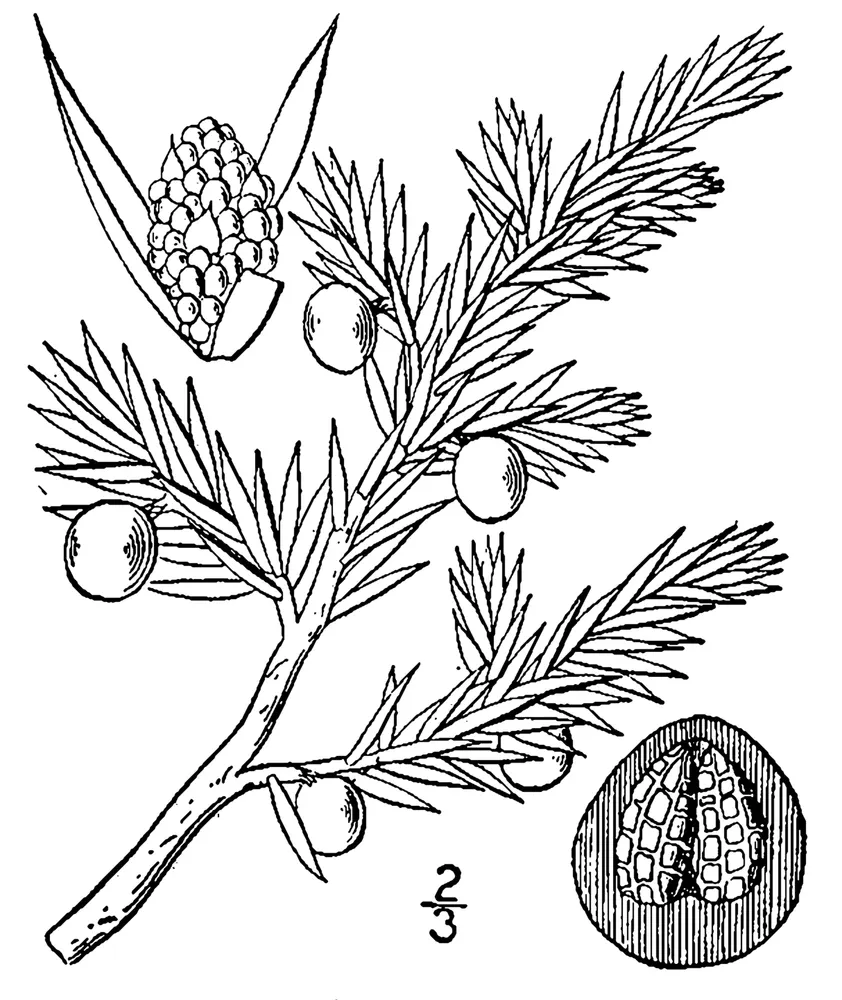
Photo: USDA-NRCS PLANTS Database / Britton, N.L., and A. Brown. 1913. Illustrated flora of the northern states and Canada. Vol. 1: 66., Public domain (via Wikimedia Commons)
Siberian Juniper
Juniperus sibirica
Also known as Dwarf Siberian Juniper, Alpine Juniper, Mountain Juniper
Key benefits
✦Traditional uses
✦Across the taiga and tundra, this hardy little juniper has long been gathered by northern peoples who found little else growing where it thrived. Its resinous, blue-black berries were chewed or brewed into warming infusions traditionally used to ease a heavy stomach after fatty meals and to support the kidneys and urinary tract. Siberian hunters and herders also tucked the branches into smoky fires, believing the sharp evergreen smoke cleansed a dwelling and kept illness at bay. Its cousin, the common juniper, shares much of this folk history and the two are often used interchangeably in old herbals.
How to grow & use it
✦The full apothecary for Siberian Juniper
Traditional remedies and step-by-step preparations, a complete growing guide, and how to harvest, dry, and store it, all unlocked with HerbLens Unlimited.
- ✦Remedies & preparations
- ✦ Growing guide
- ✦Harvest & storage
From under $6 a month. Free plant identifications always included.
- ✦Ginger
- ✦Dandelion root
- ✦Rosemary
- ✦Common juniper (Juniperus communis) berries
- ✦Caraway seed
“When you want a resinous, forest-born spice to warm a heavy meal and steady the stomach after it.”
Siberian juniper is one of the toughest conifers on earth, hugging the ground and hunkering below the snowline to survive winters far colder than almost any other tree can bear, which is exactly why northern foragers came to prize its berries so highly.
Avoid juniper berries during pregnancy and with kidney disease, since regular or excessive use can irritate the kidneys, and never take the essential oil internally. Correct identification matters, since related species like savin juniper (Juniperus sabina) are toxic and must not be confused with this one.