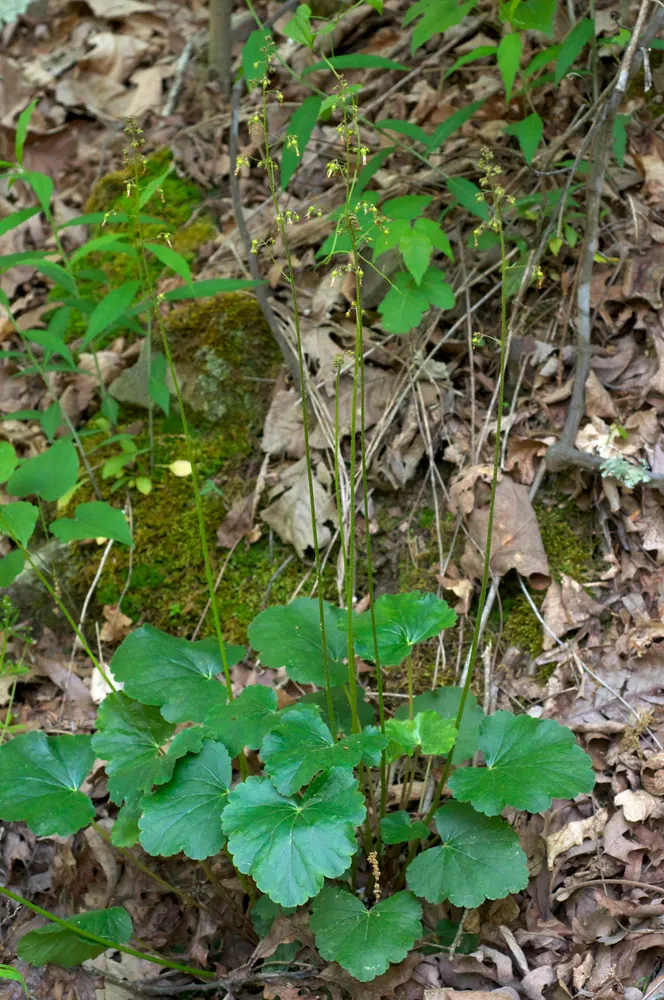
Photo: Eric Hunt, CC BY-SA 4.0 (via Wikimedia Commons)
American Alum Root
Heuchera americana
Also known as American alumroot, Rock geranium, Alum root, Cliff alumroot
Key benefits
✦Traditional uses
✦Long before it found its way into shade gardens, American alum root was a working plant in the medicine bundles of Cherokee, Iroquois, and other Native American healers, who dug its thick, puckery root for its powerful astringent bite. Steeped into a strong decoction, the root was used traditionally as a gargle for sore throats and mouth sores, and as a wash for wounds, burns, and hemorrhoids, valued for its tightening, drying effect on tissue. Early American settlers picked up the practice too, brewing the root into remedies for diarrhea and using the same puckering decoction on cuts and scrapes when nothing else was on hand. Its name says it all: taste the raw root and you will understand instantly why it was likened to alum, the old pickling and dyeing mineral prized for the same mouth-drying astringency.
Growing guide
✦Fresh to dried
✦Traditional preparations
✦Astringent Root Gargle
Traditionally used as a gargle and mouth rinse for a scratchy, irritated throat or minor mouth soreness, valued for its tightening, drying quality.
How it's made. Simmer 1 teaspoon of dried, chopped alum root in 1 cup of water for 10 to 15 minutes, covered. Strain and let cool until comfortably warm, then gargle or swish, spitting out rather than swallowing.
Cooled Root Wash
A traditional topical wash for minor scrapes and irritated skin, applied cool with a clean cloth.
How it's made. Simmer 1 tablespoon of dried root in 2 cups of water for 15 minutes, strain, and let cool completely before dabbing onto clean, unbroken skin with a soft cloth.
- ✦Yarrow
- ✦Plantain
- ✦Self-heal
- ✦Wild geranium root
- ✦Blackberry root
“For the old-fashioned tightening touch of an astringent, when a scraped knee or a scratchy throat calls for something the cliffside herbalists already knew.”
Heuchera americana shares its common name with an entirely different plant, wild geranium (Geranium maculatum), which pioneers also called American alum root and used in almost the exact same astringent way, simply because both roots share that same alum-like, mouth-puckering taste.
American alum root has not been documented as toxic, but its very high tannin content means it should be used sparingly and only for short periods; too much can cause stomach upset or interfere with the body's absorption of certain nutrients and medications. It is best kept to external washes and occasional gargles rather than regular internal use, and traditional decoctions should never be swallowed in the case of a gargle. Safety data is lacking for pregnancy, breastfeeding, and use in young children, so it is wise to avoid it during those times. As with any traditional remedy, speak with a qualified healthcare professional before using American alum root, especially alongside other medications.