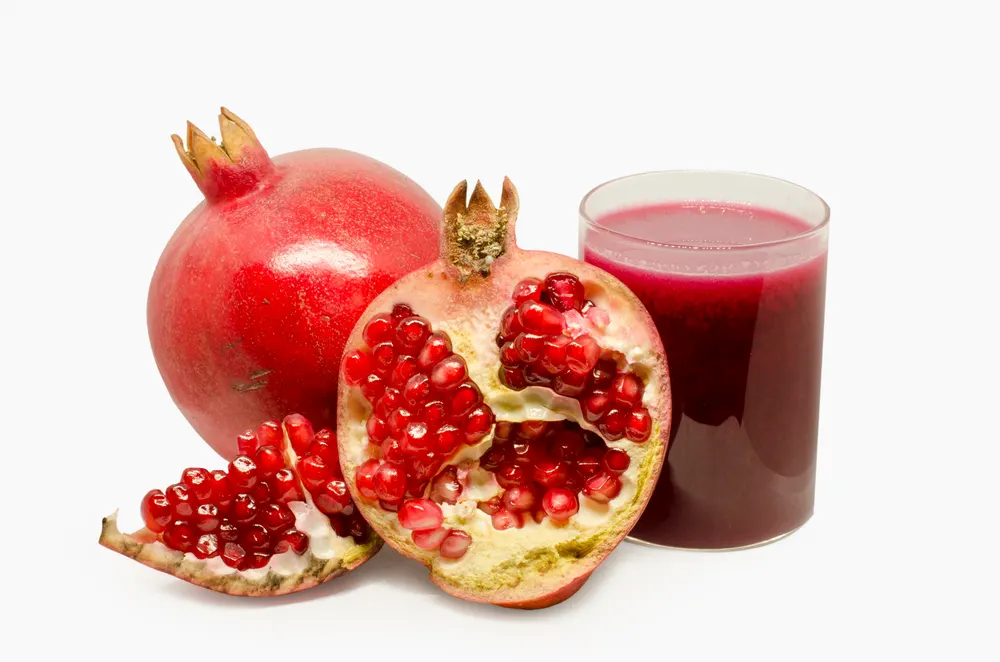
Photo: Augustus Binu : flickr, CC BY-SA 3.0 (via Wikimedia Commons)
Pomegranate
Punica granatum
Also known as Chinese Apple, Grenadine Tree, Anar
Key benefits
✦Traditional uses
✦Pomegranate has been treasured since antiquity, its jeweled seeds carved into Persian palace reliefs and buried alongside Egyptian pharaohs as provisions for the afterlife. In Greek myth it was the fruit Persephone tasted in the underworld, binding her to return each year, a story ancient people told to explain the turning of the seasons. Across Ayurvedic, Unani, and traditional Mediterranean medicine, the juice was valued as a tonic for vigor and the heart, while the dried rind was steeped into a tea traditionally used to calm a sore throat and settle an unsettled stomach. For thousands of years it has also stood as a symbol of abundance and fertility at weddings and New Year tables from Turkey to India.
How to grow & use it
✦The full apothecary for Pomegranate
Traditional remedies and step-by-step preparations, a complete growing guide, and how to harvest, dry, and store it, all unlocked with HerbLens Unlimited.
- ✦Remedies & preparations
- ✦ Growing guide
- ✦Harvest & storage
From under $6 a month. Free plant identifications always included.
- ✦Hibiscus
- ✦Rose
- ✦Ginger
- ✦Hibiscus
- ✦Cranberry
“For a jewel-bright handful of ruby seeds that taste like autumn distilled into something sweet and tart at once.”
The word grenade comes from the French pomme grenate, meaning pomegranate, because early hand-thrown explosives were shaped like the fruit and scattered fragments the way its seeds scatter when it splits open.
The fruit, juice, and peel are a safe, everyday food, but the bark, root, and stem contain toxic alkaloids and should never be eaten or prepared as a remedy. Juice and supplements can interact with blood pressure medications, blood thinners, and liver-metabolized drugs.