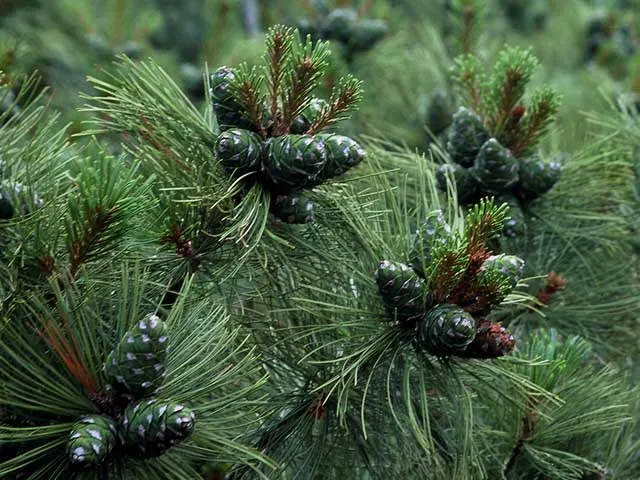
Photo: No machine-readable author provided. Inti-sol~commonswiki assumed (based on copyright claims)., CC BY-SA 3.0 (via Wikimedia Commons)
Siberian Dwarf Pine
Pinus pumila
Also known as Dwarf Siberian Pine, Creeping Pine, Elfin Wood, Kedrovy Stlanik
Key benefits
✦Traditional uses
✦Long before citrus reached the far reaches of Siberia, hunters and travelers of the northern taiga chewed the young needle tips of this low, wind-bent pine to ward off scurvy through the dark winter months. Its needles carry a concentrated dose of vitamin C, and Russian and Indigenous Siberian folk traditions have long steeped them into resinous, warming teas for coughs, colds, and general vitality. The soft resin was traditionally daubed onto cuts and sores as a protective seal, while the small, sweet seeds were gathered and eaten as a nourishing forest food, prized for the energy they offered through lean seasons. Even today, in the villages that sit at the edge of its range, a cup of pine needle tea remains a familiar remedy for the first sniffle of winter.
How to grow & use it
✦The full apothecary for Siberian Dwarf Pine
Traditional remedies and step-by-step preparations, a complete growing guide, and how to harvest, dry, and store it, all unlocked with HerbLens Unlimited.
- ✦Remedies & preparations
- ✦ Growing guide
- ✦Harvest & storage
From under $6 a month. Free plant identifications always included.
- ✦Rosehip
- ✦Thyme
- ✦Eucalyptus
- ✦Scots pine needles
- ✦Eastern white pine needles
“When you want to bring the resinous, evergreen breath of the northern taiga into a warming winter cup.”
Unlike most pines that grow as tall, upright trees, Pinus pumila sprawls sideways along the ground, bending flat beneath heavy snow each winter and springing back up in spring, a growth habit called krummholz that lets it survive at the very edge of the Arctic tree line where nothing taller can stand.
Not considered toxic, but pine needle preparations are traditionally avoided during pregnancy, and pollen or resin can trigger allergic skin reactions in sensitive people. Before gathering needles in the wild, be sure to distinguish pine from yew (Taxus), a genuinely poisonous evergreen sometimes confused with it.