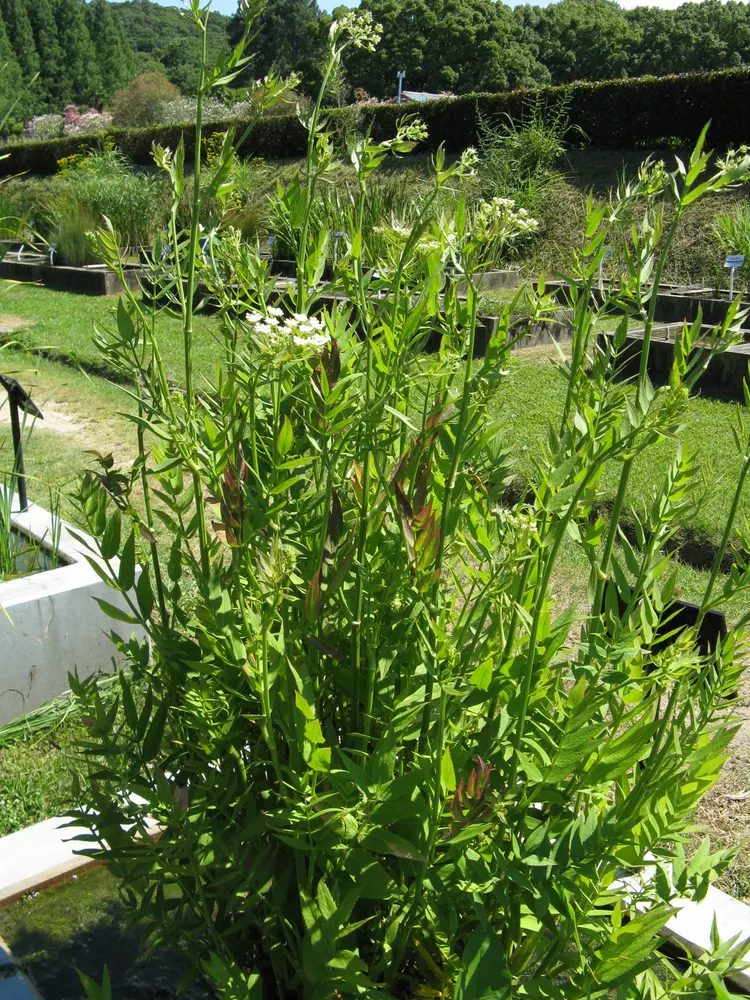
Photo: KENPEI, CC BY-SA 3.0 (via Wikimedia Commons)
Water Parsnip
Sium suave
Also known as Hemlock Water Parsnip, Indian Cucumber Root (regional, not to be confused with Medeola), Sweet Sium
Key benefits
✦Traditional uses
✦Water parsnip's root was dug and cooked as a starchy vegetable by numerous Native American nations, who knew the wetlands where it grew and could tell it apart from its dangerous relatives after a lifetime of careful observation. Some groups also used parts of the plant in traditional preparations passed down through oral knowledge, though these practices were tied closely to expert, hands-on identification rather than written recipes. Today the plant is remembered more as a marker of that deep botanical knowledge than as something to be casually gathered.
How to grow & use it
✦The full apothecary for Water Parsnip
Traditional remedies and step-by-step preparations, a complete growing guide, and how to harvest, dry, and store it, all unlocked with HerbLens Unlimited.
- ✦Remedies & preparations
- ✦ Growing guide
- ✦Harvest & storage
From under $6 a month. Free plant identifications always included.
- ✦Cattail (Typha)
- ✦Wapato (arrowhead)
- ✦Wild mint
- ✦Cultivated parsnip, positively identified
- ✦Garden carrot
“A plant to admire from the edge of the marsh, not to gather on your own.”
Water parsnip was gathered as a starchy root vegetable by many Native American nations, from the Cree to the Iroquois, who dug and cooked it much like a wild carrot. But it grows shoulder to shoulder with water hemlock, one of the most lethally poisonous plants in North America, and the two can look nearly identical to an untrained eye. This resemblance has made the Sium and Cicuta genera a textbook warning in every serious foraging guide.
Water parsnip grows in the same marshes and ditches as water hemlock (Cicuta maculata and Cicuta douglasii), widely considered among the most acutely poisonous plants in North America, and the two can be very difficult to tell apart without expert training. Water hemlock contains cicutoxin, which can cause seizures, respiratory failure, and death within hours of ingestion, and misidentification between the two genera has caused serious poisonings and fatalities. Because of this, Sium suave should never be gathered, prepared, or consumed based on a guidebook or photo alone. This entry is offered for botanical and historical interest only, not as an invitation to forage. If you are drawn to wild edible or medicinal plants of the carrot family, learn from an experienced field botanist or professional forager in person, and always consult a qualified healthcare provider or clinical herbalist before considering any wild plant for the body, especially during pregnancy or for children.