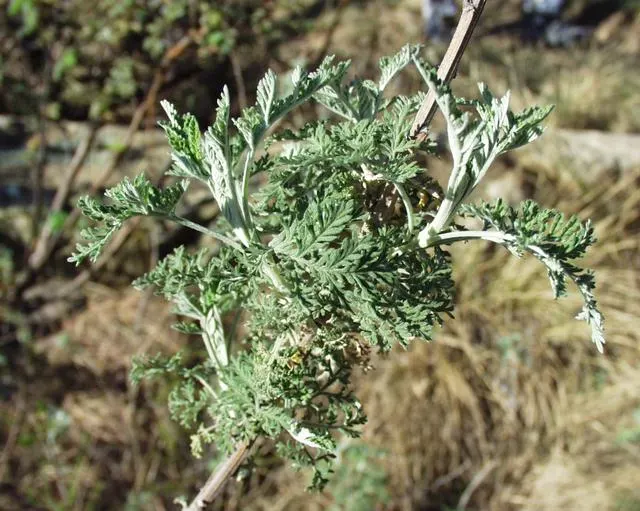
Photo: H Brisse (upload by Abalg), CC BY-SA 3.0 (via Wikimedia Commons)
African Wormwood
Artemisia afra
Also known as Umhlonyane, Wilde-als, Lengana, African Sagewort, Wild Wormwood
Key benefits
✦Traditional uses
✦Known across southern Africa as umhlonyane, African wormwood is one of the continent's most enduring household remedies, kept close at hand in gardens from the Cape to the Karoo for as long as anyone can remember. Zulu, Xhosa, Sotho, and Khoisan healers have long turned to its silvery, camphor-scented leaves for coughs, colds, fevers, and troubled digestion, brewing them into a bitter tea or crushing them fresh to inhale. Sprigs were also bound into bundles and burned in the home, a practice meant to clear both the air and the spirit during illness. It traveled with settlers too, earning the Afrikaans name wilde-als, and remains a fixture of traditional medicine chests today, standing alongside more famous relatives like European wormwood without ever quite stepping into the same spotlight.
Growing guide
✦Fresh to dried
✦Traditional preparations
✦Traditional Cold and Flu Tea
A warming, bitter infusion traditionally sipped at the very first sign of a cold, sniffle, or seasonal chill.
How it's made. Traditionally, a tea is made by steeping 1 teaspoon of the dried leaf (or a few fresh leaves) in 250 ml of just-boiled water for 5 to 10 minutes, then straining. Drunk warm, often with a little honey, for no more than a few days at a time.
Steam Inhalation for Congestion
A simple household remedy for a stuffy head or tight chest, passed down through generations of southern African home care.
How it's made. A handful of fresh leaves is added to a bowl of freshly steaming water. Leaning over the bowl with a towel draped over the head, the fragrant steam is breathed in gently for several minutes.
- ✦Honeybush
- ✦Ginger
- ✦Lemon
- ✦Yarrow
- ✦Elderflower
“When the season turns and the first cough settles into the chest, reach for the silvery, camphor-scented leaves of African wormwood.”
Sangomas, the traditional healers of southern Africa, have long bound African wormwood into smoking bundles believed to clear both a sickroom and its spirits, and the plant is still sold in bunches at muti markets from Johannesburg to Cape Town alongside the more famous herbs of Western herbalism.
African wormwood's essential oil contains thujone-related compounds and should never be taken internally; the plant itself shouldn't be used in large amounts or for more than a few days. It has traditionally been avoided during pregnancy and breastfeeding, and anyone with epilepsy or a ragweed sensitivity should be cautious.