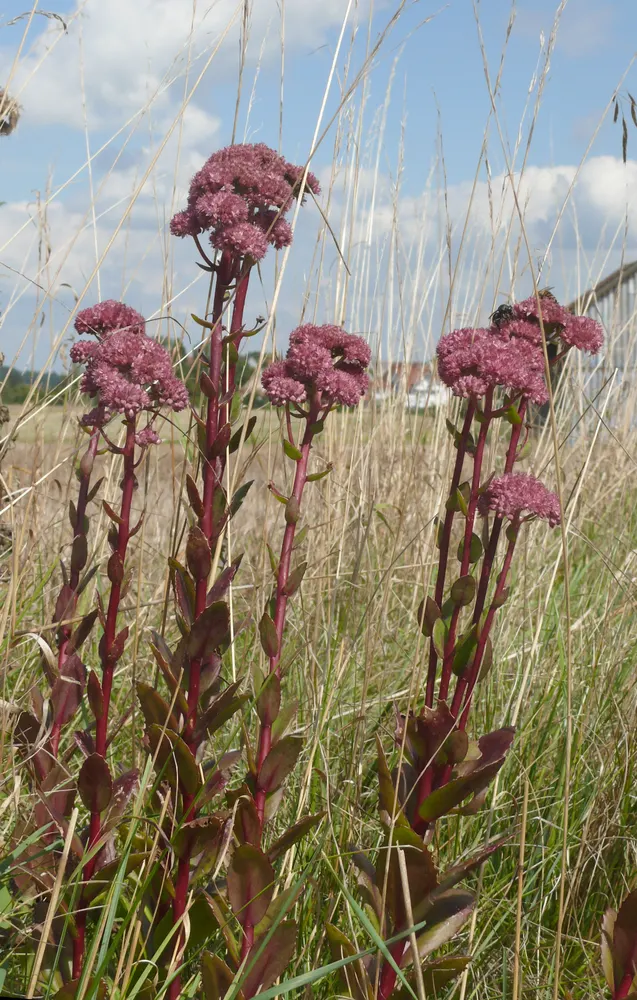
Photo: Bernd Haynold, CC BY-SA 3.0 (via Wikimedia Commons)
Orpine
Sedum telephium
Also known as Orpine, Livelong, Witch's Moneybags, Live-forever, Midsummer Men
Key benefits
✦Traditional uses
✦Orpine has long been a fixture of the European cottage garden, valued as much for its old-fashioned charm as for its usefulness. Country folk kept a clump near the kitchen door so a leaf could be split open and pressed onto a fresh cut, burn, or bee sting, in the same practical spirit as houseleek and aloe. Its thick, water-storing leaves made it a natural choice for this kind of quick, close-at-hand first aid long before modern dressings existed. The plant also carried a gentler, more whimsical role in folk tradition as a Midsummer love charm, hung in the home to foretell romance.
How to grow & use it
✦The full apothecary for Orpine
Traditional remedies and step-by-step preparations, a complete growing guide, and how to harvest, dry, and store it, all unlocked with HerbLens Unlimited.
- ✦Remedies & preparations
- ✦ Growing guide
- ✦Harvest & storage
From under $6 a month. Free plant identifications always included.
- ✦Plantain
- ✦Yarrow
- ✦Calendula
- ✦Houseleek (Sempervivum tectorum)
- ✦Aloe vera
“When a scrape or small burn needs something soothing and close at hand, straight from the garden bed.”
In old England, orpine was called Midsummer Men and hung indoors on Midsummer Eve as a homely love oracle. A pair of leaves or stems was set side by side, and if they leaned toward one another overnight, it was taken as a sign of a happy match.
No major toxicity is documented, and orpine has a long history of safe topical folk use for minor scrapes. Patch test first, since some people are sensitive to the leaf sap, and it isn't a substitute for proper wound care.