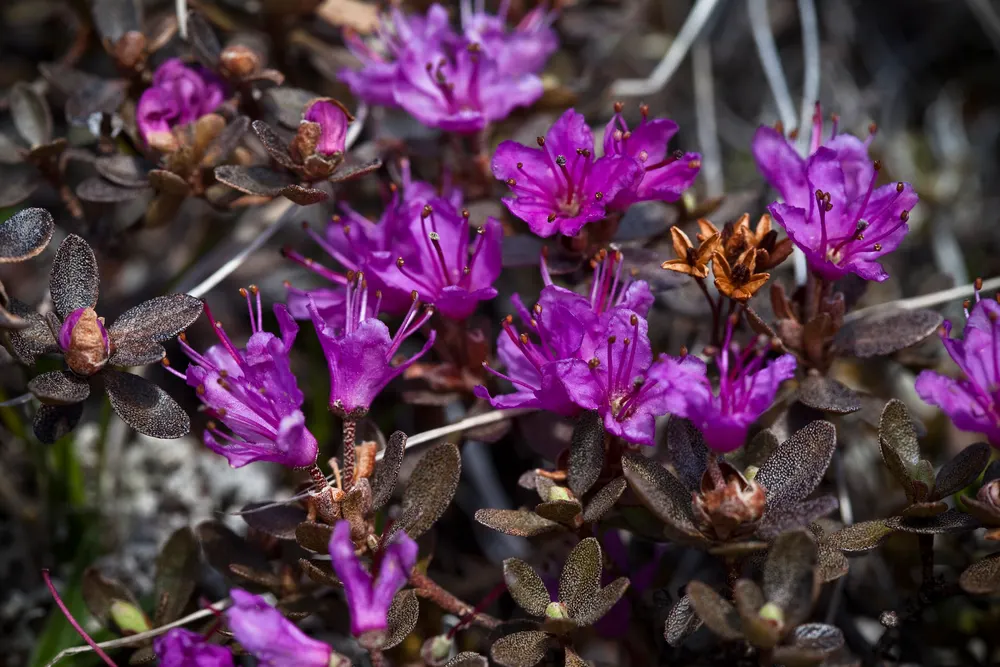
Photo: NPS / Jacob W. Frank: Denali National Park and Preserve, Public domain (via Wikimedia Commons)
Lapland Rosebay
Rhododendron lapponicum
Also known as Lapland rosebay, Lapland rhododendron
Key benefits
✦Traditional uses
✦Lapland rosebay has never been a plant of the herbalist's cupboard. It belongs instead to the story of exploration and botany: the great naturalist Carl Linnaeus encountered it on his 1732 journey through Lapland, and the region he traveled through later gave its name to both the plant and his landmark work, Flora Lapponica. For the Sami and other circumpolar peoples who have long lived alongside it, the shrub is better known as a fixture of the tundra landscape and a marker of short, brilliant arctic summers than as something gathered for the body. Its low, woody carpets and knobby purple blooms are still prized today by rock gardeners chasing that same hardy, high-latitude beauty at home.
How to grow & use it
✦The full apothecary for Lapland Rosebay
Traditional remedies and step-by-step preparations, a complete growing guide, and how to harvest, dry, and store it, all unlocked with HerbLens Unlimited.
- ✦Remedies & preparations
- ✦ Growing guide
- ✦Harvest & storage
From under $6 a month. Free plant identifications always included.
- ✦Moss campion
- ✦Dwarf arctic willow
- ✦Alpine bearberry
- ✦Other cold-hardy dwarf rhododendrons grown strictly as ornamentals
“For the gardener dreaming of a rock garden that blooms defiantly under the midnight sun, not for the herbalist's shelf.”
Rhododendron lapponicum was one of the plants Carl Linnaeus collected and described on his 1732 expedition through Lapland, and the trip's account, Flora Lapponica, both introduced this little shrub to Western science and lent its name to the species.
Lapland rosebay is not a plant for the kitchen or the medicine chest. Like most members of the rhododendron genus, it produces grayanotoxins in its leaves, flowers, and nectar, compounds known to cause nausea, vomiting, drooling, weakness, dangerously low blood pressure, and irregular heart rhythms if ingested by people or grazing animals (this is the same toxin family behind so-called "mad honey" poisoning). Never eat any part of this plant, brew it into tea, or let children or pets chew on it. Because it is genuinely hazardous, no traditional remedies are listed here. If you grow it, treat it strictly as an ornamental, and if ingestion is ever suspected, contact a poison control center or physician right away rather than trying to treat it at home.