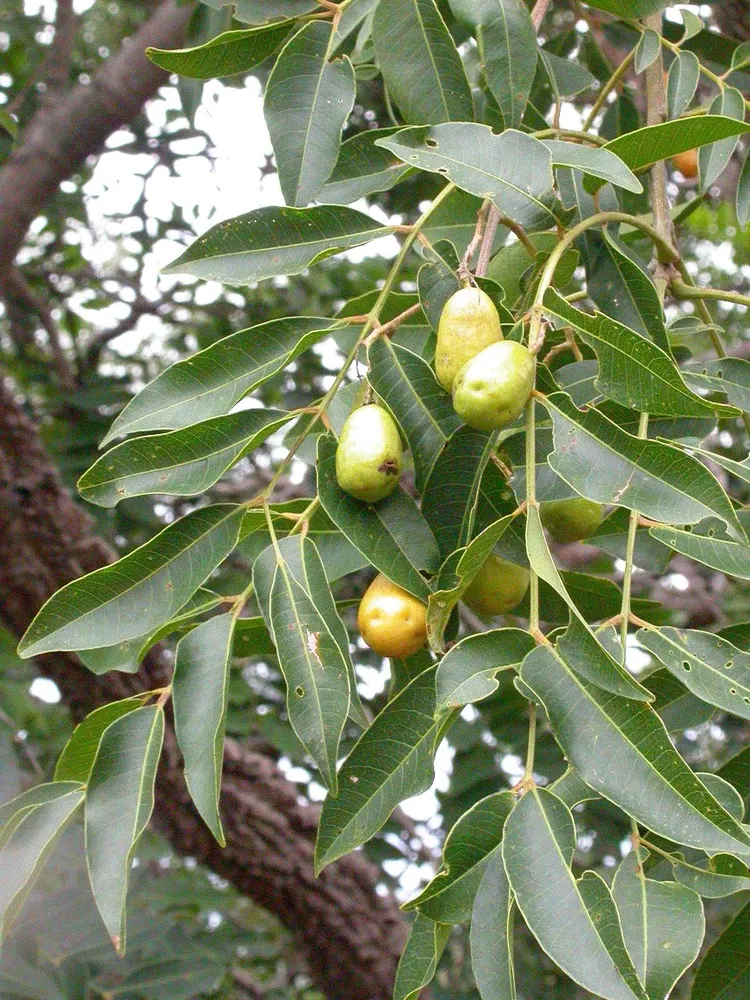
Photo: Marco Schmidt, CC BY-SA 2.5 (via Wikimedia Commons)
Yellow Mombin
Spondias mombin
Also known as Hog Plum, Jobo, Ciruela, Iyeye (Yoruba), Ciruela Amarilla
Key benefits
✦Traditional uses
✦Long before it traveled with the slave trade to West Africa, where it took root so thoroughly that many now assume it native there, yellow mombin was already a fixture of home medicine chests across the Caribbean and tropical Latin America. Healers steeped the tannin-rich leaves and bark into decoctions for upset stomachs, loose bowels, and feverish complaints, while the sour golden fruit was eaten fresh, dried, or fermented into a tart wine believed to settle the digestion after a heavy meal. In Yoruba households the leaves, called iyeye, still find their way into soups and washes passed down through generations. The tree itself became a kind of living infrastructure, its cuttings planted as fence posts that rooted and leafed out into shade and fruit all at once.
How to grow & use it
✦The full apothecary for Yellow Mombin
Traditional remedies and step-by-step preparations, a complete growing guide, and how to harvest, dry, and store it, all unlocked with HerbLens Unlimited.
- ✦Remedies & preparations
- ✦ Growing guide
- ✦Harvest & storage
From under $6 a month. Free plant identifications always included.
- ✦Ginger
- ✦Guava Leaf
- ✦Lemongrass
- ✦Guava Leaf
- ✦Blackberry Leaf
“For the bright, sour-sweet gold of a fruit that has soothed stomachs and marked fence lines across two continents.”
A yellow mombin fence post, cut, planted, and simply left in the ground, will often root and grow into a full fruiting tree, a trick that turned property boundaries across the tropics into edible, shading hedgerows.
The ripe fruit is a common, safe tropical food. Traditional leaf and bark teas are rich in tannins and can cause stomach upset or constipation in excess, and their safety in pregnancy and breastfeeding is not established, so it's best to avoid these preparations at that time.