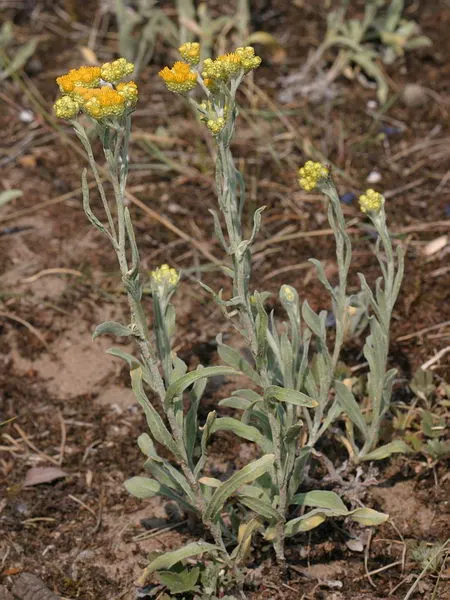
Photo: CC BY-SA 3.0 (via Wikimedia Commons)
Immortelle
Helichrysum arenarium
Also known as Everlasting, Sand Everlasting, Yellow Everlasting, Dwarf Everlast
Key benefits
✦Traditional uses
✦Across the Balkans and much of Eastern Europe, the small golden flower heads of immortelle have long been dried and steeped as a bitter tonic to help settle a heavy meal and support the liver and gallbladder. Village herbalists gathered it from dry, sun-baked hillsides where little else would grow, prizing it as a gentle helper for the digestive system rather than a dramatic cure. In France, the same plant took on a second life in perfumery, where its warm, honeyed scent earned it the name immortelle, the everlasting one. Both traditions, the medicinal and the fragrant, grew from the same simple observation: this humble flower keeps its color, shape, and character long after it is cut.
How to grow & use it
✦The full apothecary for Immortelle
Traditional remedies and step-by-step preparations, a complete growing guide, and how to harvest, dry, and store it, all unlocked with HerbLens Unlimited.
- ✦Remedies & preparations
- ✦ Growing guide
- ✦Harvest & storage
From under $6 a month. Free plant identifications always included.
- ✦Dandelion root
- ✦Milk thistle
- ✦Chamomile
- ✦Dandelion root
- ✦Artichoke leaf
“For the heavy afternoon, when a meal sits stubborn and the body asks for a gentle nudge toward ease.”
Immortelle's papery, straw-textured petals barely change once picked, which is exactly why French perfumers named it immortelle, the everlasting flower, and why it has been woven into dried wreaths and bouquets for centuries.
Immortelle stimulates bile flow, so avoid it if you have gallstones or a bile duct obstruction except under professional supervision. It's not recommended during pregnancy or breastfeeding, as safety hasn't been established.