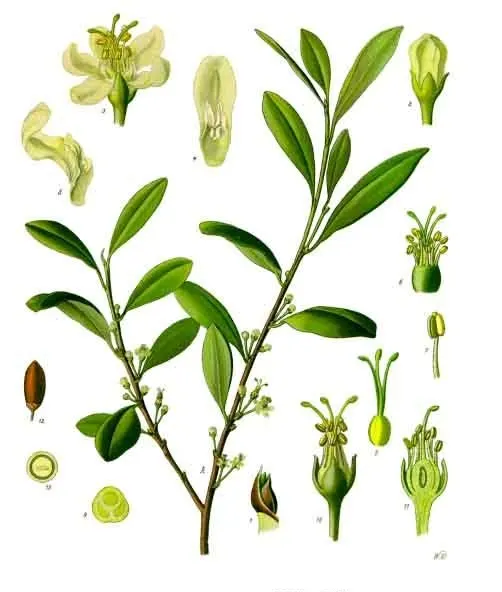
Photo: Franz Eugen Köhler, Köhler's Medizinal-Pflanzen, Public domain (via Wikimedia Commons)
Coca
Erythroxylum coca
Also known as Khoka (Quechua), Cocaine plant, Coca leaf, Hayo
Key benefits
✦Traditional uses
✦For thousands of years, communities across the Andes have chewed coca leaves, often with a pinch of lime or ash to help release their alkaloids, as a way to fend off hunger, fatigue, and the thin air of high altitude. The leaf holds deep ceremonial weight too, offered to the earth mother Pachamama, read by curanderos, and shared at gatherings as a gesture of respect and hospitality. Spanish colonizers documented Incan reverence for the plant, calling it divine, even as they later exploited its use to keep laborers working longer in the silver mines. Today it remains legal and woven into daily life in Bolivia, Peru, and parts of Argentina, even as the same leaf, once processed, is the source of a substance controlled worldwide.
How to grow & use it
✦The full apothecary for Coca
Traditional remedies and step-by-step preparations, a complete growing guide, and how to harvest, dry, and store it, all unlocked with HerbLens Unlimited.
- ✦Remedies & preparations
- ✦ Growing guide
- ✦Harvest & storage
From under $6 a month. Free plant identifications always included.
- ✦Llipta (mineral lime/ash, chewed alongside the leaf traditionally)
- ✦Muña (Andean mint)
- ✦Yerba mate
- ✦Guarana
“A plant sacred to the high Andes, not a home remedy.”
A cocaine-free coca leaf extract, produced under strict government license, has been used as a flavoring agent by a major soft drink company for over a century, one of the few legal industrial uses of the plant anywhere in the world.
Coca leaves contain the alkaloid cocaine and are classified as a controlled substance under the UN Single Convention on Narcotic Drugs. Cultivating, possessing, buying, selling, or ingesting coca leaf is illegal in most countries, including the United States, even though limited traditional use remains lawful within parts of Bolivia, Peru, and Argentina. The plant is psychoactive and habit-forming, carries serious cardiovascular and neurological risks, and is unsafe during pregnancy or alongside heart conditions, high blood pressure, or many prescription medications. This entry is provided strictly for historical and botanical reference and is not guidance for cultivation or use. No preparations are given here; for any questions about the plant's legal status or history, consult a qualified professional or your local authorities.