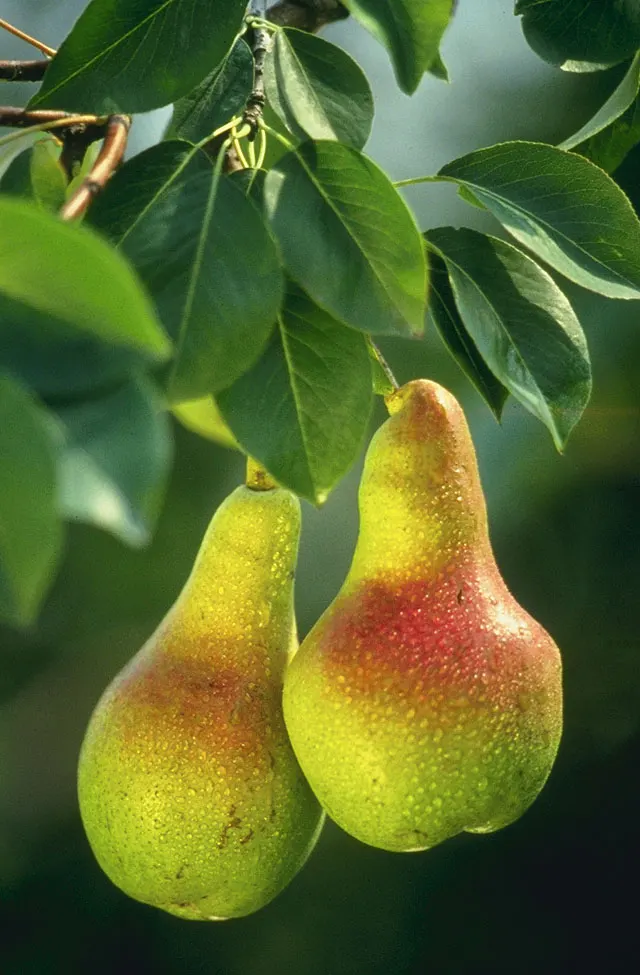
Photo: Keith Weller, Public domain (via Wikimedia Commons)
European Pear
Pyrus communis
Also known as Common Pear, Wild Pear, Garden Pear
Key benefits
✦Traditional uses
✦Long before it graced fine tablecloths, the pear was a farmhouse staple, valued as much for its medicine chest uses as for its honeyed flesh. European folk healers stewed pears with a little honey to soothe coughs and scratchy throats, and simmered the leaves into a mild tea thought to ease the stomach and support the kidneys. The Greeks and Romans grafted and prized pear trees so highly that Homer called them a gift of the gods, and by the Middle Ages, monasteries kept careful orchards of them, passing named varieties down like heirlooms. Grandmothers still reach for a ripe, soft pear when a child's tummy is unsettled, a habit rooted in generations of quiet, kitchen-table trust.
How to grow & use it
✦The full apothecary for European Pear
Traditional remedies and step-by-step preparations, a complete growing guide, and how to harvest, dry, and store it, all unlocked with HerbLens Unlimited.
- ✦Remedies & preparations
- ✦ Growing guide
- ✦Harvest & storage
From under $6 a month. Free plant identifications always included.
- ✦Chamomile
- ✦Ginger
- ✦Cinnamon
- ✦Quince
- ✦Apple
“When you want an old-fashioned, honeyed sweetness that comforts as gently as it nourishes.”
Unlike most fruit, pears are meant to be picked before they ripen. Left on the branch too long, the flesh near the core develops gritty little clusters called stone cells, which is why orchardists harvest them firm and let them finish sweetening on the counter.
Pear flesh and skin are safe to eat, but don't eat the seeds in quantity, since like apple seeds they contain small amounts of amygdalin.