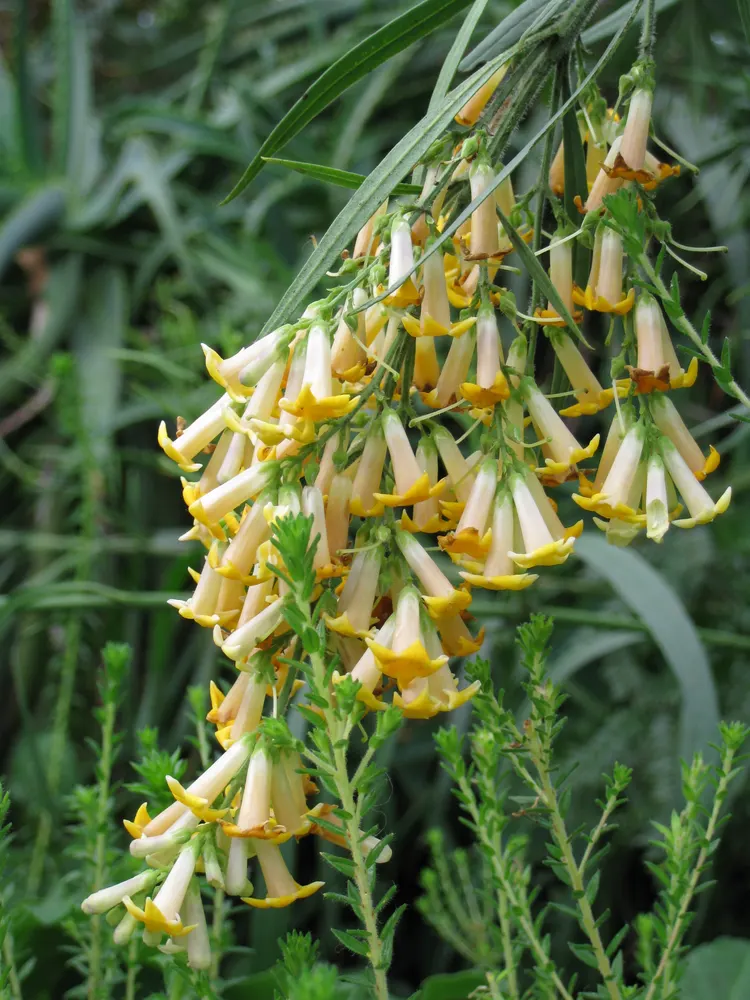
Photo: David Jones, CC BY 2.0 (via Wikimedia Commons)
Honeybells
Freylinia lanceolata
Also known as Honeybell bush, Heuningklokkiesbos
Key benefits
✦Traditional uses
✦Freylinia lanceolata does not carry a documented history as a medicinal or culinary herb. Its story instead belongs to the garden and the veld: South African growers have long prized it as a graceful, willow-leaved hedge and windbreak, and its Afrikaans name, heuningklokkiesbos, or honey bell bush, comes from the way its golden, tubular flowers give off a warm scent of honey that draws bees, butterflies, and sunbirds from a distance. Planted along streambanks and dam edges in its native range, it has become one of the more familiar indigenous shrubs used to soften a fence line or shade a townhouse courtyard.
How to grow & use it
✦The full apothecary for Honeybells
Traditional remedies and step-by-step preparations, a complete growing guide, and how to harvest, dry, and store it, all unlocked with HerbLens Unlimited.
- ✦Remedies & preparations
- ✦ Growing guide
- ✦Harvest & storage
From under $6 a month. Free plant identifications always included.
“For a hedge that hums with bees and glows gold just when the rest of the winter garden has gone quiet.”
The willowy, drooping foliage of Freylinia lanceolata looks so much like a weeping willow that first-time visitors to a Cape garden often do a double take when they catch the scent of honey drifting from its golden bell flowers, a fragrance willows never have.
Honeybells has no documented food or medicinal use, so it's best treated as an ornamental plant only and not eaten.